Blog / Flooring
Types of Ceramic Flooring: Tile Buyer’s Guide
Ceramic versus porcelain, glazed and unglazed, PEI wear ratings, slip resistance, grout and sealing, and where tile suits a Toronto home.
Quick answer
Ceramic against porcelain
Porcelain is a type of ceramic, not a separate material. Porcelain uses a finer, denser clay fired at a higher temperature, and it is defined by water absorption of 0.5 percent or less. Everything above that is classed as ceramic. That one number drives most of the practical differences.
In a Toronto home that means porcelain for an entry that takes winter boots and road salt. Ceramic is a reasonable floor in a low traffic room or a powder room, and the usual choice on walls.
Glazed and unglazed
A glaze is a glass layer fired onto the surface. It carries the colour, pattern and finish, and it seals the face of the tile so liquids cannot soak in. Most floor tile sold for homes is glazed.
Unglazed tile is the fired clay body itself, so the colour runs all the way through. Quarry tile and some through body porcelain fall in this group. The look is flatter, a chip is far less visible, and the surface is often more grippy. The trade off is that it is porous to some degree and usually needs sealing to resist staining.
Finish is a separate choice from glazing. A gloss finish reflects more light but shows footprints, dust and fine scratches. A matte finish hides both and is easier to live with on a floor. Textured finishes add grip. Polished porcelain is the one to think twice about on a floor, because polishing opens micro pores in the surface and it can be slippery when wet.
PEI wear ratings
The PEI rating measures how well a glazed surface resists visible wear from foot traffic. It applies to the glaze, not the tile body, so an unglazed tile is not given a PEI number. It is about abrasion and nothing else.
For most rooms PEI 3 is enough and PEI 4 is the safe pick for the front hall. Check the rating before you fall for a tile, because a wall tile put on a hallway floor will look worn within a couple of winters.
Sizes and slip
Large format tiles, roughly 12 by 24 inches and up, are the common choice now because fewer grout lines make a floor easier to clean. They also demand a flatter subfloor. The bigger the tile, the less it follows a dip, and the more likely you get lippage, which is one tile edge sitting proud of the next. Mosaic follows a surface more willingly, which is why it is normal in a shower base that slopes to a drain.
Slip resistance is measured as dynamic coefficient of friction, written DCOF. The usual benchmark for a level interior floor that may get wet is 0.42 or higher, and it is printed on the technical sheet. Texture, a matte finish and more grout lines all add grip. Polished and high gloss surfaces reduce it. In an entry that collects snow, this number deserves as much attention as the colour.
Grout and sealing
This is where most tile advice goes wrong. A glazed tile is already sealed by its glaze and does not need a sealer. Grout is the porous part.
A mid tone grout in a busy room stays looking clean far longer than a bright white one. Unglazed tile is the exception to the rule above and should be sealed as its manufacturer directs.
Pick the grout width
Rectified tiles have machine cut edges and allow narrow joints. Pressed tiles vary slightly in size and need a wider joint. Your tile decides this.
Sanded or unsanded
Sanded cement grout for wider joints, unsanded for narrow ones. Epoxy grout costs more and is harder to install, and in return it resists stains and needs no sealing.
Seal the grout
Cement based grout should be sealed once cured, and resealed periodically in a kitchen or bathroom. A penetrating sealer soaks in rather than leaving a film.
Silicone the movement joints
Corners, the room perimeter and the joint where the floor meets a tub or shower base get flexible silicone, not grout. Grout there cracks as the building moves.
Where tile suits
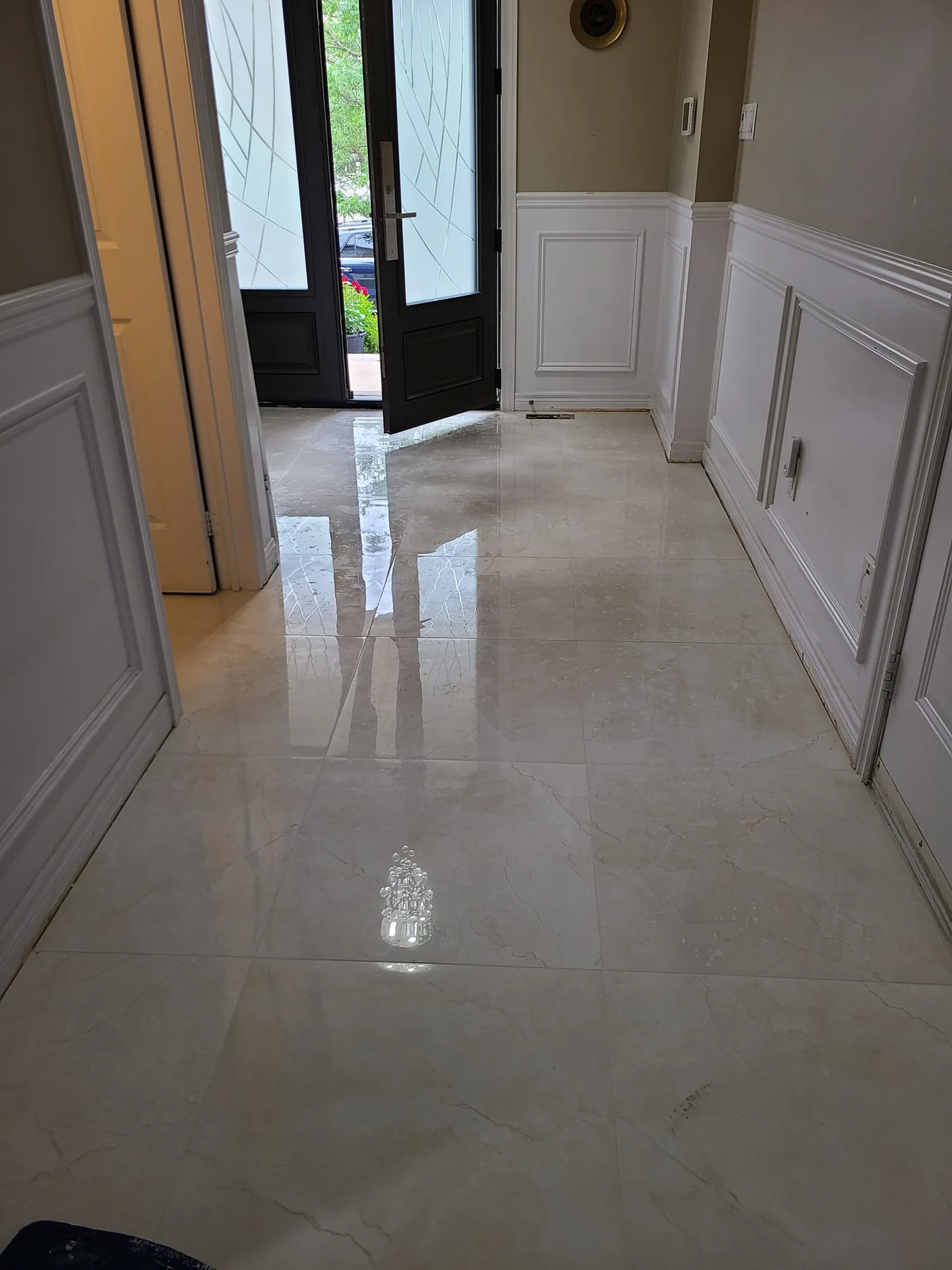
In a Toronto house, tile earns its place where water and grit turn up. Bathrooms and shower walls, laundry rooms, mud rooms and the front entry are the obvious ones, and a tiled entry that can be mopped after a salty week is a real advantage over wood or laminate. Kitchens work well too, though tile is hard underfoot, so a mat at the sink helps.
Tile is also the usual surface over in-floor heating, because it conducts heat well. Against it: tile is cold without heat under it, a dropped glass will not survive, and a heavy floor needs a structure that can carry it, which matters in older homes with springy joists. A basement slab is an ideal base.
What it costs
Floor tile installation starts from $13.50 per square foot for porcelain and ceramic, with thinset, grout and clips extra. The final price is fixed in writing after a free in-home measure, because the work varies far more than a floating floor does. Tile size and layout, subfloor levelling, whether an uncoupling membrane or a waterproofing layer is needed, cuts, thresholds, stairs and removal of the old floor all change the labour.
The tile itself is priced separately from the installation. Browse our tile collection, see how we handle tile installation, or read how much a flooring renovation costs. We measure free across Toronto and the GTA.
Frequently asked questions
What is the difference between ceramic and porcelain tile?
Porcelain is a ceramic made from finer clay fired at a higher temperature, with water absorption of 0.5 percent or less. It is denser and harder, so it suits busy floors and wet areas. Ceramic is more porous and softer, which makes it easier to cut and a common choice for walls and lighter traffic floors.
Do I need to seal ceramic tile?
Glazed tile does not need sealing, because the glaze already seals the surface. Cement based grout does need sealing after it cures, and resealing from time to time. Unglazed tile should be sealed according to the manufacturer’s instruction.
What PEI rating should a floor tile have?
PEI 3 covers most residential floors, including kitchens and living areas. PEI 4 is the better choice for an entry, a hallway or a home with dogs. PEI 1 and 2 are for walls and light traffic rooms only.
Which tile is least slippery?
Look for a dynamic coefficient of friction, or DCOF, of 0.42 or higher on the technical sheet for an interior floor that may get wet. Matte and textured finishes, and smaller tiles with more grout lines, give more grip. Polished and high gloss surfaces give less.
How much does tile installation cost in Toronto?
Floor tile installation starts from $13.50 per square foot, with thinset, grout and clips extra. We confirm a fixed written price after a free in-home measure, because tile size, layout, subfloor preparation, waterproofing, cuts and removal of the old floor all change the labour. The tile itself is priced separately from the installation.
Keep reading