Blog / Flooring
Refinish or Replace Your Hardwood?
What refinishing costs against a new floor, how to tell how much wood your boards have left, and when replacing really is the better call.
Quick answer
Most people asking this have a floor that looks tired: scratched, faded, the wrong colour for the house now. That’s usually a refinish. Here’s how the two compare on price, how to tell which one your floor needs, and what each job involves. Our hardwood refinishing page has the service itself.
Refinishing vs replacing: the cost
| Option | Per sq ft | 800 sq ft |
|---|---|---|
| Refinish your existing hardwood | $6.50 | $5,200 |
| Replace with floating engineered hardwood | $8.70 to $12.45 | $6,960 to $9,960 |
| Replace with glued or nailed engineered hardwood | $10.40 to $14.15 | $8,320 to $11,320 |
| Replace with solid hardwood | $11.25 to $13.75 | $9,000 to $11,000 |
Refinishing covers sanding the floor back to bare wood, the repairs, the stain and the finish coats. The replacement figures add our installation rate, with the old floor taken up, to typical GTA store prices for the wood itself, before tax. The exact number for your floor is on a fixed written quote after a free measure. Every rate is on our Toronto installation cost page.
Signs it needs a refinish
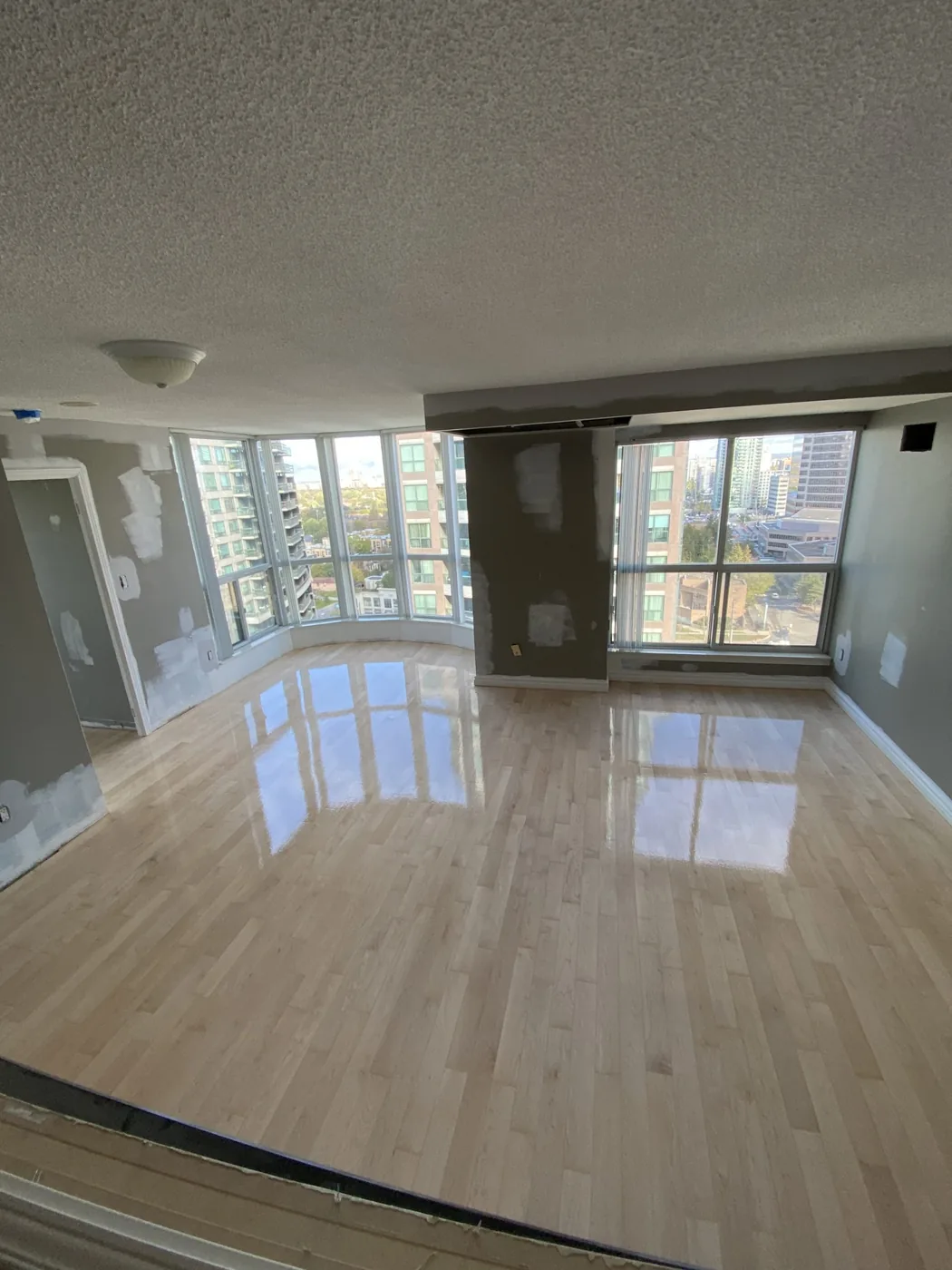
- The damage is in the surface. Scratches, pet marks, worn traffic lanes and sun fading all sit in the top of the wood, and sanding takes them away.
- You want a different colour. Once it’s back to bare wood, the floor can be stained a new colour and finished from matte to gloss. That’s the main reason people refinish a floor that isn’t actually worn out.
- The boards are solid but a few squeak. Loose or squeaking boards are repaired as part of the refinish, before the finish goes on.
- You like the floor you have. The boards stay where they are, so you’re paying for the work and the finish rather than for new wood.
When it’s time to replace
- There’s not enough wood left to sand. On thin engineered boards, or a solid floor that’s been sanded too many times, you can reach the tongue. Then there’s nothing left to refinish.
- Large areas are damaged. Boards that are cupped, lifting or soft from water, or loose across whole rooms, need replacing rather than sanding.
- You want a different floor. Wider boards, a lighter species, or a pattern like herringbone can’t be sanded into an existing floor. See whether herringbone is worth it.
- The subfloor needs work. If the problem is underneath, the boards have to come up anyway.
Replacing is $4.50 per square foot installed for solid hardwood and $4.90 for glued or nailed engineered, including glue and nails, with your old floor taken up in the price. The wood is priced on top. See hardwood installation.
How to tell how much wood is left
It depends on how much wood sits above the tongue, the part of the board that locks into the next one. You can get a rough idea yourself:
- Lift a heating vent cover and look at the cut edge of the board in the opening. You’ll see the board’s thickness, and on engineered hardwood, the separate top layer of real wood.
- Check a threshold or the top of the stairs, anywhere the edge of a board is exposed.
- Look at the worn areas. If the tongue is already showing between boards in the traffic lanes, the floor has been sanded as far as it can go.
Then let us look. We check what’s left before recommending a refinish, rather than after the machines are out, and we only take the job on if there’s enough wood to sand.
Refinishing engineered hardwood
Often, once. Engineered boards have a layer of real wood on top of a plywood or composite core, and that top layer is what gets sanded. A thick veneer on a quality board sands like solid hardwood and can take more than one refinish. A thin one often allows a single sanding, and sometimes none. Solid hardwood can usually take several sandings over its life.
If you’re choosing a new floor and want to refinish it one day, the thickness of that top layer matters more than the brand. More on the difference in engineered vs solid hardwood.
Changing the colour
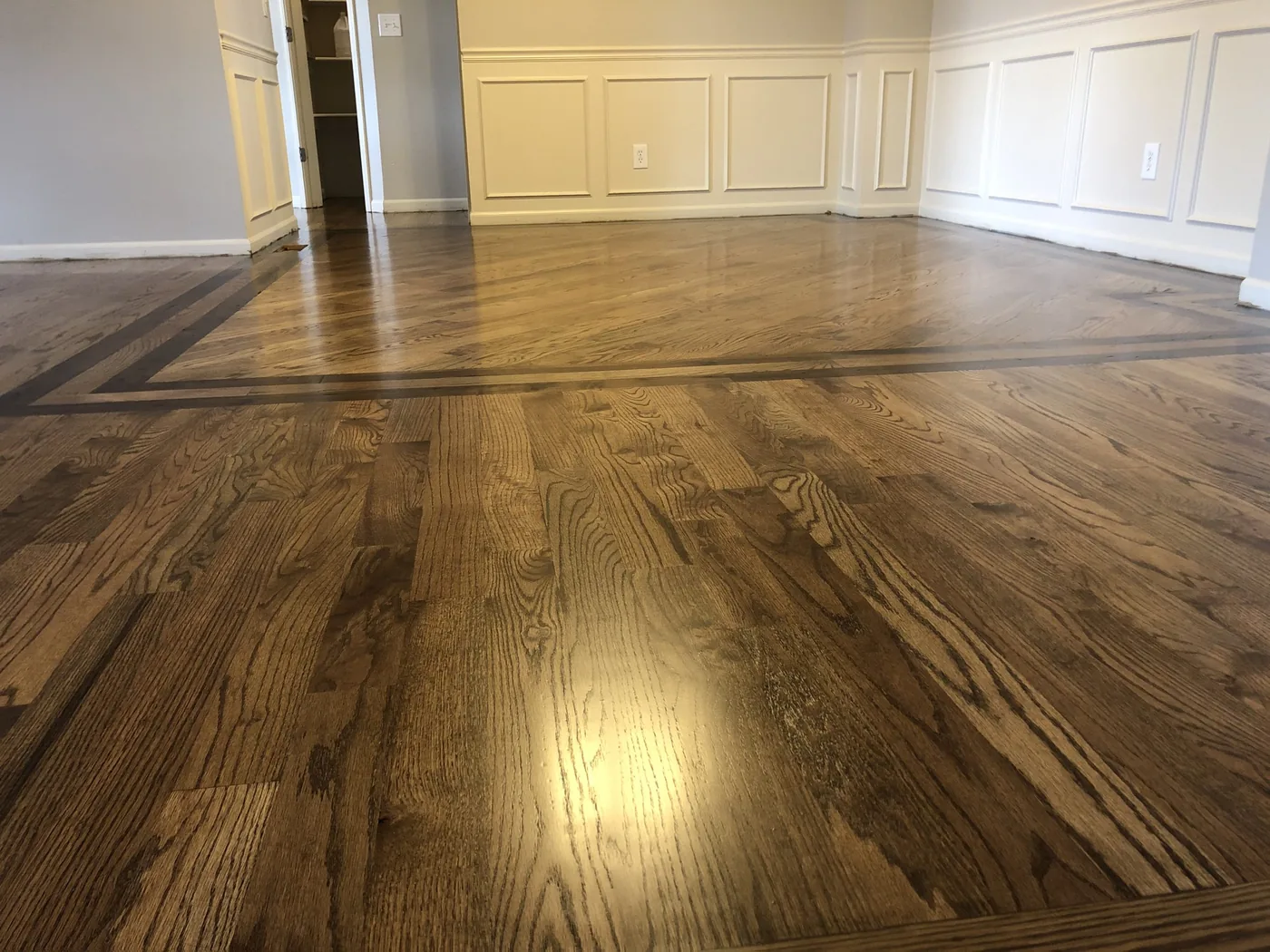
A refinish is a chance to change the look completely. An orange-toned oak from the nineties can go to a natural light oak, or the other way. Details like a border inlay or a parquet pattern are kept and sanded with the rest of the floor.
If the stairs meet the floor, refinish them at the same time so the colours match. Our Bolton stair refinishing job shows old oak stairs taken to a natural light oak.
How a refinish is done
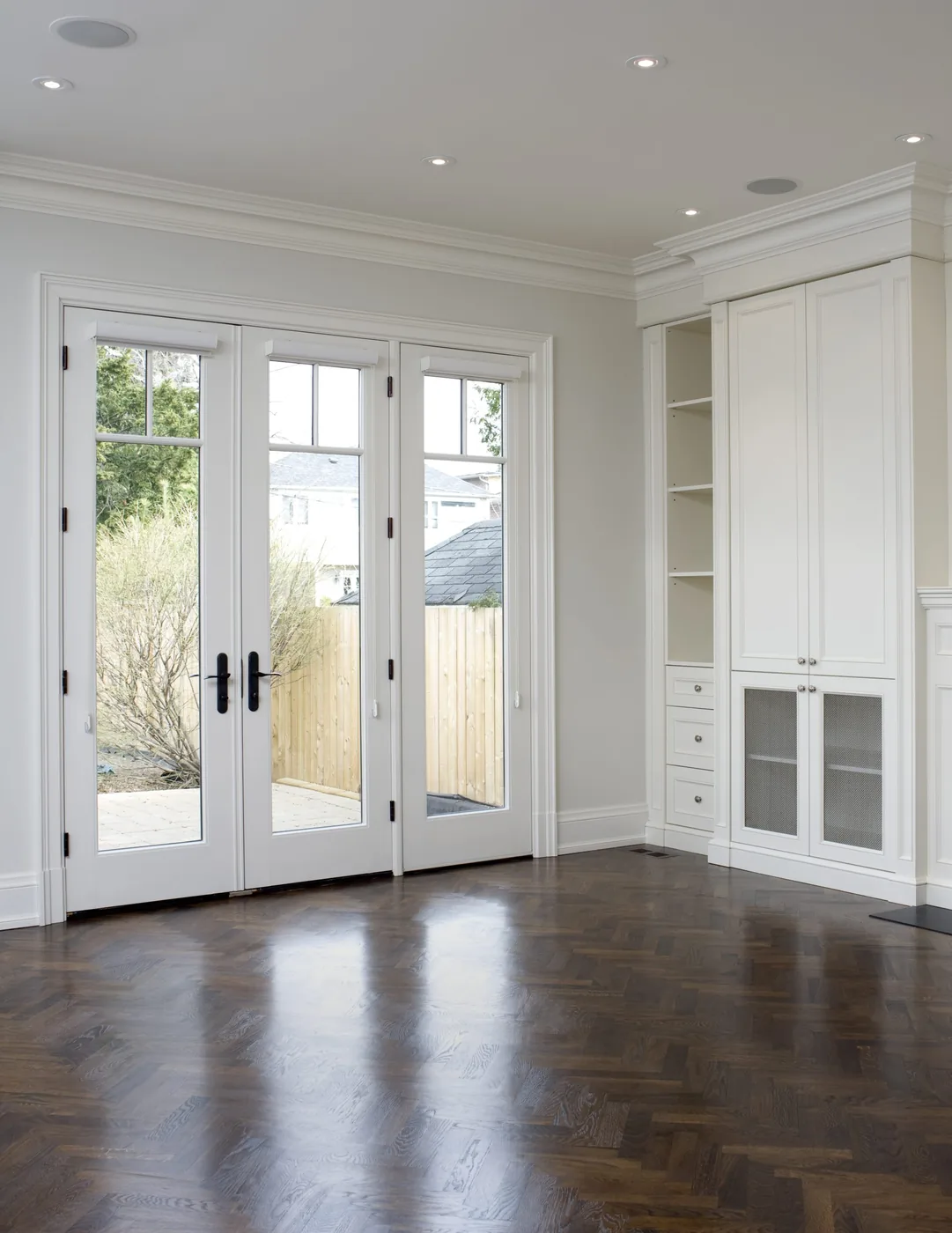
- Sanding back to bare wood, with dust-contained equipment.
- Repairs: filling what needs filling and fixing loose or squeaking boards.
- Stain, if you’re changing the colour.
- Finish coats, in the sheen you choose.
It usually takes a few days, and the drying decides the schedule more than the labour does. The rooms are out of use between finish coats, and the finish has a smell while it cures, so plan around those rooms for those few days.
Get a price
Send us a few photos of the floor, including a close-up of the worst area and, if you can, the edge of a board at a vent. We’ll tell you whether it looks like a refinish or a replacement, then book a free visit to check the wood and confirm a fixed price in writing.
Frequently asked questions
Is it cheaper to refinish or replace hardwood floors?
Refinishing is cheaper. With us it’s $6.50 per square foot, against roughly $10.40 to $14.15 per square foot to replace with glued or nailed engineered hardwood once the new wood is included. On 800 square feet, that’s about $5,200 to refinish against $8,320 to $11,320 to replace.
How many times can hardwood floors be refinished?
Solid hardwood can usually take several sandings over its life. Engineered hardwood depends on the thickness of its top layer: a thick veneer can take more than one, a thin one often allows a single sanding and sometimes none.
When should you replace a hardwood floor instead of refinishing it?
When there isn’t enough wood left above the tongue to sand, when large areas are cupped, loose or water-damaged, when the subfloor needs work, or when you want a different floor, like wider boards or a herringbone pattern.
Can you refinish engineered hardwood?
Often, once. A quality engineered board with a thick top layer sands and refinishes like solid hardwood. Thin veneers often allow one sanding, sometimes none, so we check before recommending it.
How long does refinishing hardwood floors take?
Usually a few days. Sanding and staining go quickly; the finish coats set the timeline, and the rooms stay out of use between them.
Can I change the colour of my hardwood floor?
Yes. Once the floor is sanded to bare wood it can be stained a different colour and finished in any sheen from matte to gloss.
Keep reading