Blog / Flooring
Problems with Vinyl Plank Floors
Gaps, peaking, hollow spots, dents, sun and water underneath: what causes the common vinyl plank problems, and how the right floor laid the right way avoids them.
Quick answer
Here’s each problem, what usually causes it, and how it’s avoided. If you’re still choosing a floor, start with the types of vinyl flooring or laminate vs vinyl plank.
- The problems at a glance
- Why vinyl planks separate and leave gaps
- Peaking and buckling: when the floor has nowhere to go
- Hollow spots and a bouncy floor
- Dents and scratches
- Fading, movement and stains
- Water under the floor
- Can a damaged vinyl plank be fixed?
- Click or glue-down?
- What we check before laying vinyl
- Frequently asked questions
The problems at a glance
| Problem | Usual cause | How it’s avoided |
|---|---|---|
| Gaps between planks | Temperature swings, or a dip in the subfloor flexing the joints | A flat subfloor, and planks settled in the room before they’re laid |
| Peaking or buckling | No expansion gap, or an island or trim pinning a floating floor | A gap at every wall, and glue-down where heavy cabinets sit |
| Hollow or bouncy spots | Low spots in the subfloor that weren’t filled | The subfloor checked and levelled before the floor goes down |
| Dents and scratches | A thin wear layer or soft core in a busy room | The right wear layer and core for the room, and felt pads |
| Fading or movement | Strong direct sun through big windows | A better rigid core plank, and blinds in the brightest rooms |
| Water underneath | A leak running in at the edges and seams | Quick clean-up, and drying out the subfloor after a leak |
Why vinyl planks separate and leave gaps
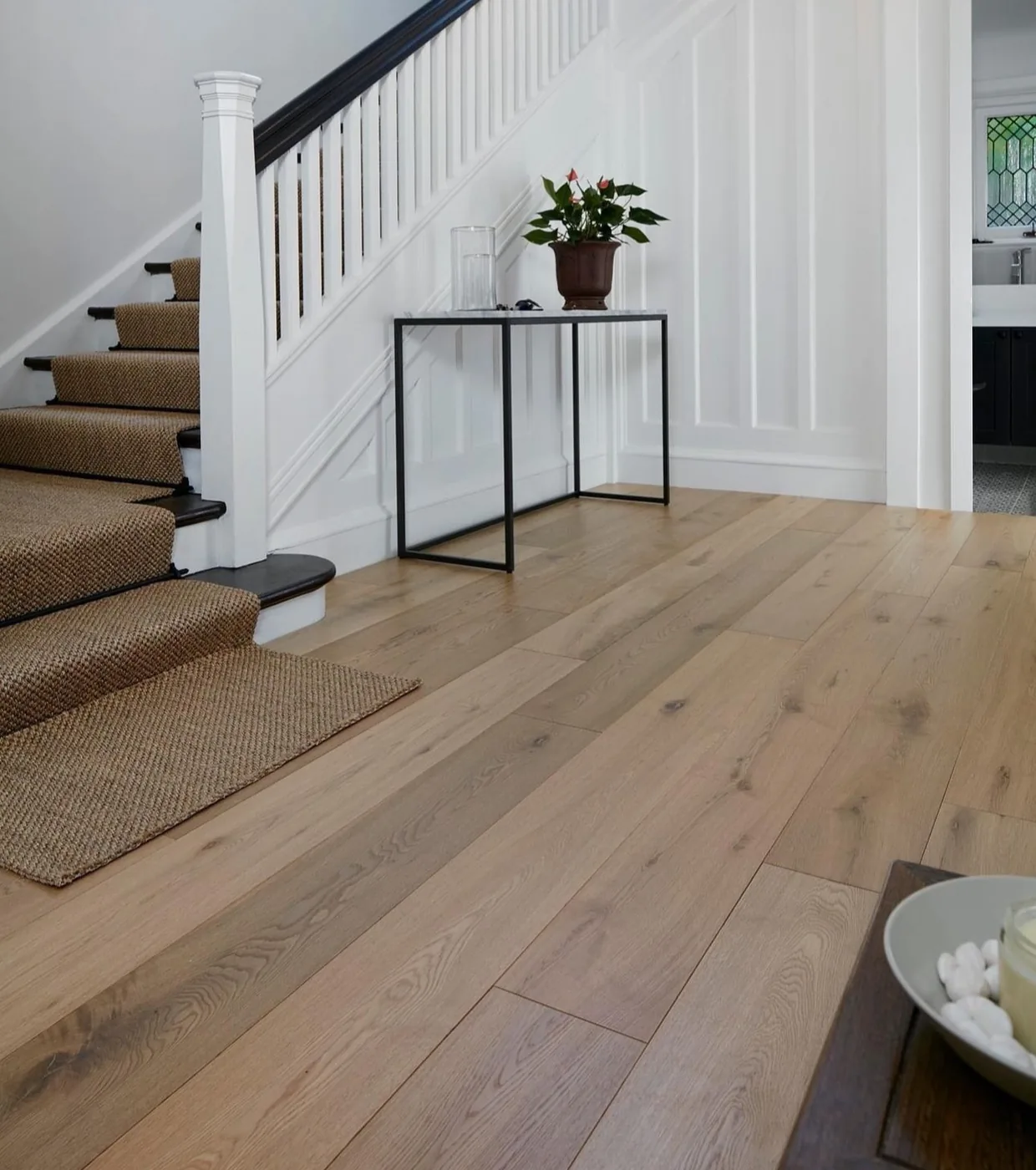
Vinyl moves with temperature. It grows a little in heat and shrinks in the cold, and a click floor that floats over the subfloor moves as one sheet. In a room that swings a lot, like a sunroom, an unheated addition or a floor in strong sun, that movement can open the joints.
The other cause is underneath. Click joints are made to lock on a flat surface. Over a dip, every step flexes the joint a little, and over months it can work loose or crack the locking edge.
Planks that were stored somewhere cold and laid straight away can shrink once the room warms up, which is why manufacturers ask for the boxes to settle in the room first.
Peaking and buckling: when the floor has nowhere to go
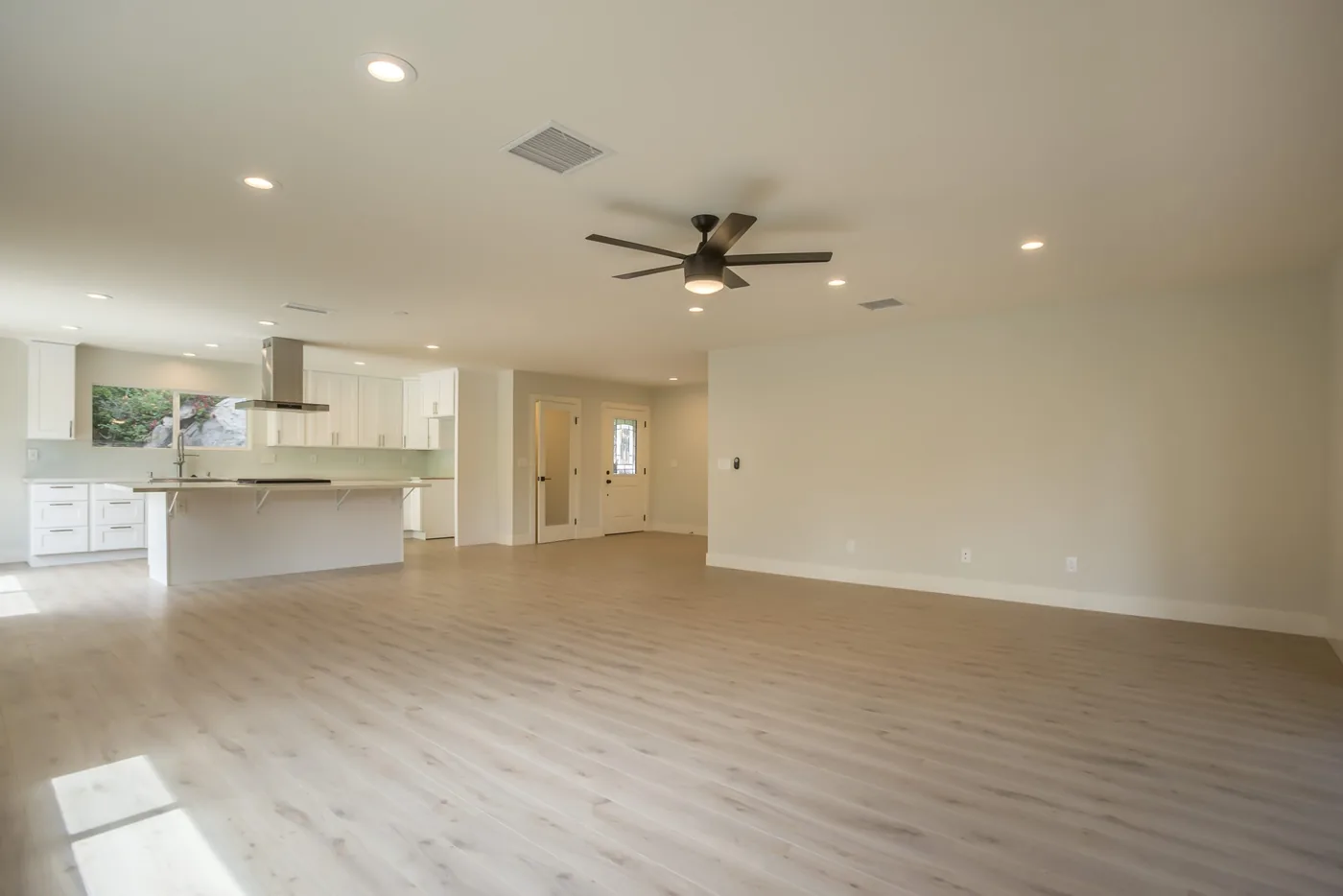
Peaking is the opposite of gapping. Two planks push up into a ridge because the floor has expanded and something is stopping it. The usual culprits:
- No expansion gap. A floating floor needs a small gap at every wall, hidden under the baseboard or quarter round. Butt it tight to the wall and it has nowhere to grow.
- A kitchen island or heavy cabinets on top of it. A floating floor pinned under a heavy island can’t move, so the stress shows up somewhere else. This is why glue-down vinyl is the steadier choice in a kitchen with a big island, as our vinyl types guide explains.
- Trim nailed through the floor. Baseboard and quarter round are fixed to the wall, not down through the planks.
The fix is to free the floor and restore the gap. Planks that have been damaged by the pressure are replaced.
Hollow spots and a bouncy floor
A spot that sounds hollow or gives underfoot means the floor isn’t fully supported there. It’s almost always a low spot in the subfloor that wasn’t filled before the vinyl went down. A small bump is usually debris left under the floor, like a screw or a stone.
A little hollowness is normal on any floating floor. A soft, moving spot isn’t, because that flexing is what eventually breaks the click joints. That’s why the subfloor is checked before anything is laid, and any levelling it needs is on your written quote.
Dents and scratches
Vinyl plank dents under a dropped pan or a heavy chair leg, the softer WPC planks most of all. Rigid core SPC resists dents better and stays flat over a slightly uneven floor. Scratches are about the wear layer, the clear top coat measured in mils:
The vinyl on our shelves runs from 12 to 30 mil. Vinyl can’t be sanded or refinished like wood, so the wear layer you buy is the one you keep. Felt pads on chair and table legs are the cheapest protection a vinyl floor can get. For one of the lines we carry, see our Woden flooring review.
Fading, movement and stains
Cheaper vinyl can fade and move in strong, direct sun, which is worth knowing in a room with big south-facing windows or a glass-walled condo. A better rigid core plank and blinds in the brightest rooms are the answer.
The other surprise is a yellow stain under a doormat. Rubber or latex backing can react with vinyl and discolour it, so use mats the floor’s manufacturer approves. In a condo, the building’s sound rules matter as much as the floor; see condo flooring in Toronto.
Water under the floor
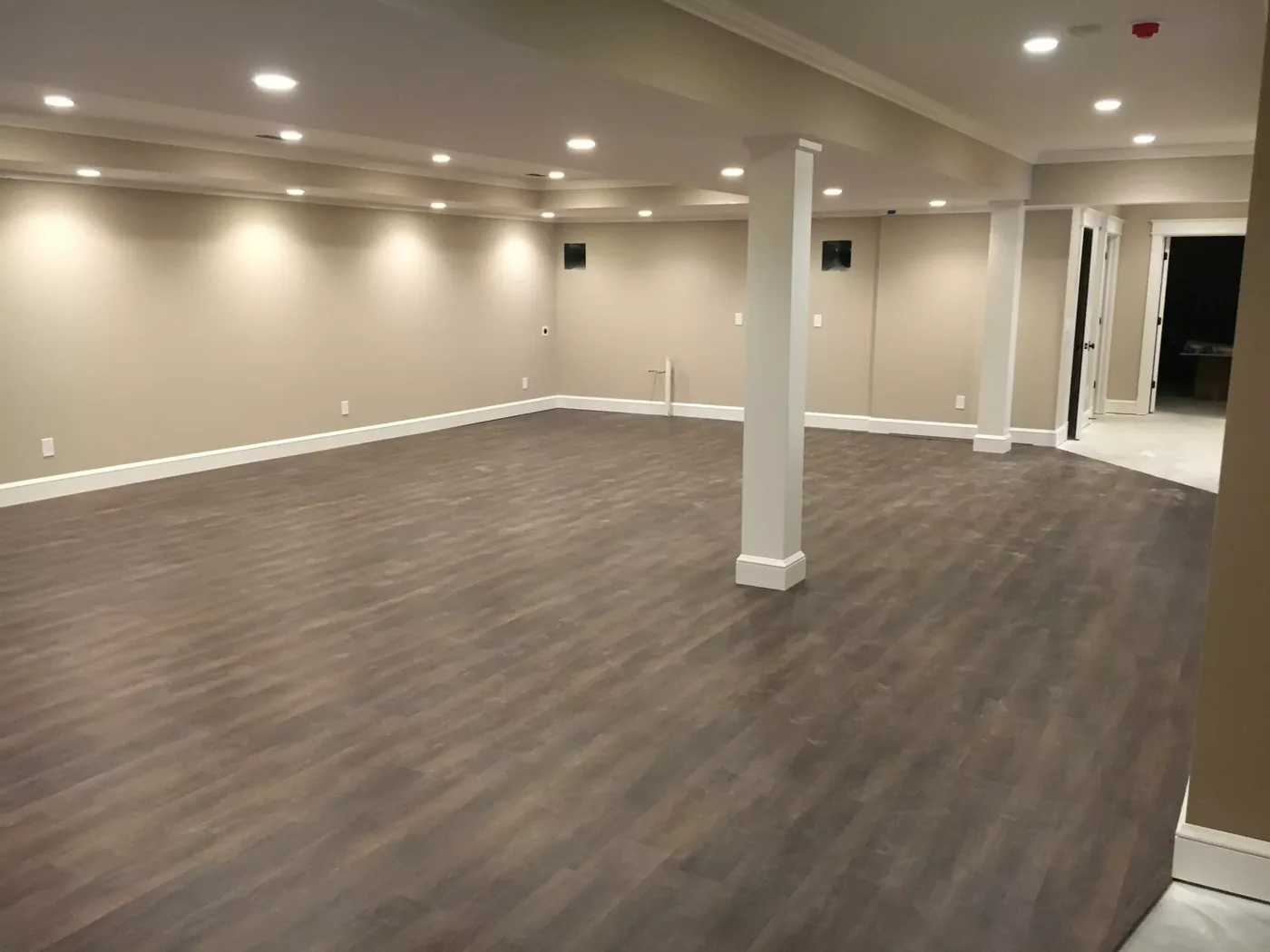
The planks are waterproof. The floor as a whole isn’t sealed. Water that runs in at the edges and seams still has to be dried out, so a leak is still a problem, just not one that ruins the planks.
That’s why vinyl is the usual pick for basements, kitchens and entryways, and also why a basement slab should be checked for moisture before any floor goes down. After a real flood, the floor is lifted and the slab dried, or mould can follow.
Can a damaged vinyl plank be fixed?
Usually, one plank at a time. A deep gouge can’t be sanded out, so the plank is replaced. On a click floor that means unclicking the rows from the nearest wall, or cutting the damaged plank out and fitting a new one. On a glue-down floor, the plank is cut out and a new one glued in.
Keep a box of spare planks from your order. Colours change between production runs, and the same floor bought two years later may not match.
Click or glue-down?
Click vinyl floats over the subfloor and is quicker to fit, which suits most homes. Glue-down is the steadier choice over large open areas and in commercial spaces, doesn’t shift under an island or a fridge, and needs a flatter subfloor. With us, click vinyl is $3.20 per square foot installed and glue-down is $5.50 including the glue, with your old floor taken up in both prices. The full comparison is in click vs glue-down vinyl, and every vinyl rate is on our vinyl installation cost page.
What we check before laying vinyl
Four things at the free measure, because they decide most of what you’ve just read:
- How flat the subfloor is, and what levelling it needs. That goes on the written quote.
- Where heavy things sit: islands, cabinets and fridges, which decide click or glue-down.
- How much sun the room gets, and how warm or cold it runs.
- How hard the room is used, so the wear layer and core suit it.
Then you get a fixed price in writing. If you’re replacing a vinyl floor that has already failed, taking it up is included. See how we lay it on our vinyl installation page.
Frequently asked questions
What are the downsides of vinyl plank flooring?
It dents under heavy or dropped objects, softer WPC planks most of all, and it can’t be sanded or refinished, so a deep gouge means replacing the plank. Cheaper vinyl can fade and move in strong direct sun, and water can still get underneath at the edges even though the planks are waterproof.
Why is my vinyl plank flooring separating?
Usually temperature swings, planks laid before they settled to the room, or a dip in the subfloor that flexes the click joints until they loosen. Small gaps can often be closed; whole rows that have come apart need the cause fixed and the planks relaid.
Why are my vinyl planks lifting at the joints?
That’s peaking: the floor has expanded with nowhere to go. The usual causes are no expansion gap at the walls, a heavy island or cabinets fixed down on a floating floor, or trim nailed through the planks.
Is vinyl plank flooring really waterproof?
The planks are, the floor isn’t sealed. Water that gets underneath at the edges still has to be dried out, so a leak is still a problem, just not one that ruins the planks.
Which vinyl plank brands should I avoid?
The brand matters less than the spec for the room. A thin wear layer or a soft core in a busy kitchen causes more trouble than any name on the box. Check the wear layer in mils, whether the core is rigid SPC or softer WPC, and whether the manufacturer approves the product for the room.
Is click or glue-down vinyl better?
Click suits most homes and is quicker to fit, at $3.20 per square foot installed with us. Glue-down is steadier over large open areas and under islands, and needs a flatter subfloor, at $5.50 including the glue. Taking up your old floor is included in both.
Keep reading