Blog / Flooring
Condo Flooring in Toronto
What your condo board will ask for, which floors work on a concrete slab, and what condo flooring costs in Toronto, with real installation prices.
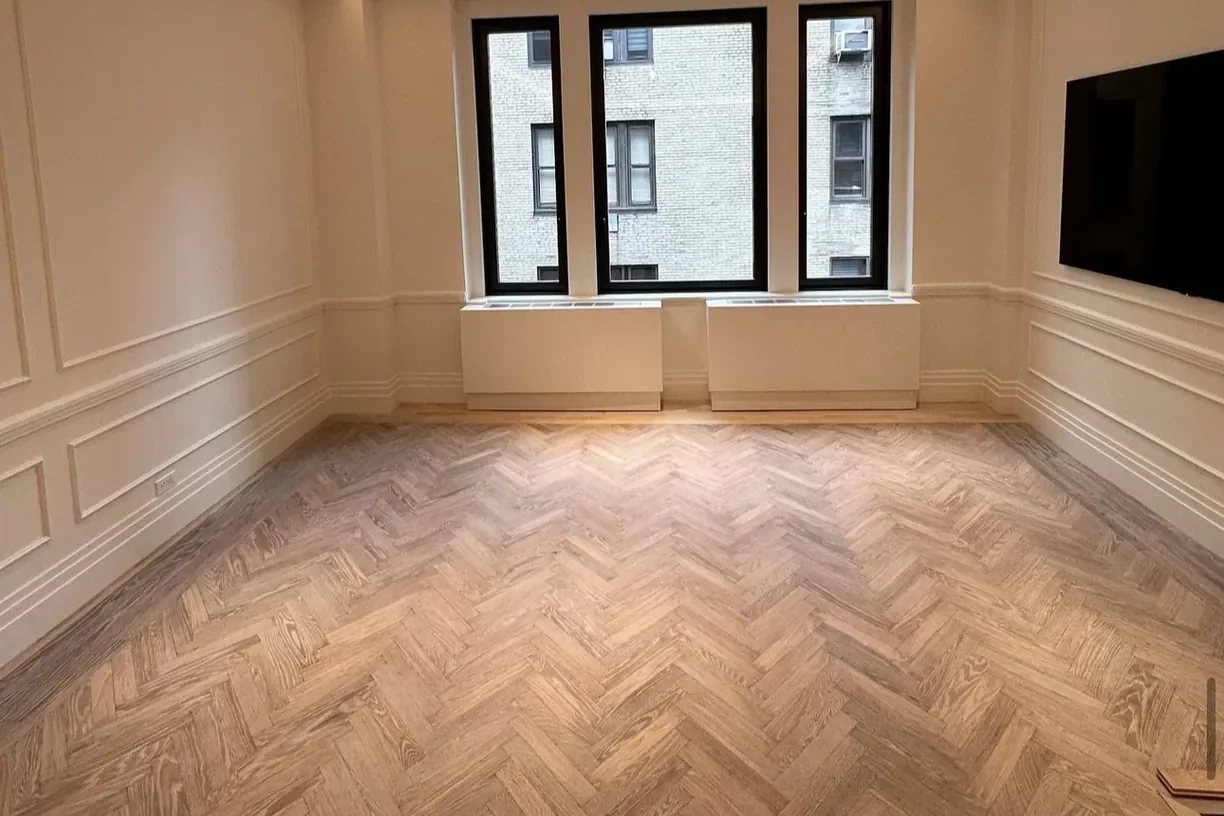
Quick answer
Here’s a common way a condo floor goes sideways. You pick a plank you love, order it, and then the property manager sends a form asking for the floor’s sound rating, your installer’s insurance certificate and an elevator booking. The box of flooring sits in the hallway for three weeks while you chase paperwork.
It doesn’t have to go that way. This guide covers what your condo board will ask for, which floors work on concrete, what condo flooring costs in Toronto with real installation prices, and how the job runs from measure to move-in. We install condo floors across Toronto and the GTA, from the towers along Yonge and Sheppard in North York to downtown, so this is the installer’s side of it.
What your condo board will ask for
Every condo corporation has a declaration and a set of rules, and almost all of them say something about floors. Before any work starts, most buildings want a renovation or alteration request with the details of what’s going down. Read your building’s rules first, then order the floor, in that order.
The rule that matters most is sound. Your neighbours downstairs hear footsteps, dropped keys and chair legs through the slab, so buildings set a minimum sound rating for the floor and the underlay together. IIC measures impact noise, STC measures airborne noise. The exact number is in your building’s rules and it varies from tower to tower, which is why we don’t quote one here. Ask the property manager for it before you choose a floor.
Then come the practical rules: the service elevator has to be booked, work happens inside set hours, and some buildings want to see the contractor’s insurance before the crew arrives. A few don’t allow glue-down floors at all.
Which floors work on a concrete slab
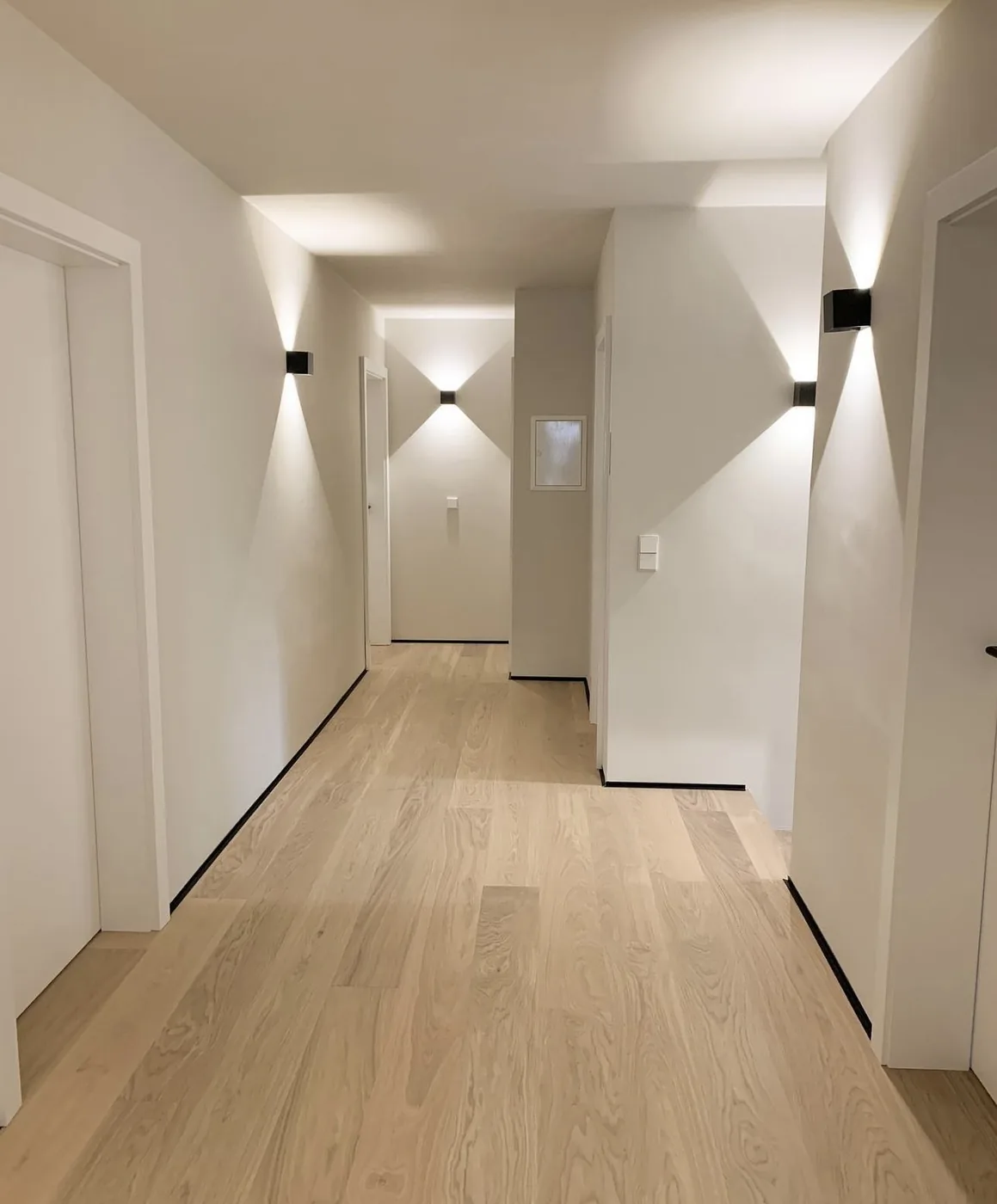
A house has a plywood subfloor you can nail into. A condo has concrete. That one difference decides most of the choice.
Solid hardwood is nailed down, so it needs plywood. On a slab it’s usually off the table, and many buildings rule it out anyway. If you want real wood, the answer is engineered.
Engineered hardwood is a real wood surface on a stable core, so it handles concrete and the dry winter air that comes with forced-air heating. It floats over the underlay or, where the building allows it, glues down. It’s also the floor we fit over radiant in-floor heating. Vidar and Woden are in our engineered range, and there’s more on the trade-offs in engineered vs solid hardwood.
Vinyl plank and laminate in a condo
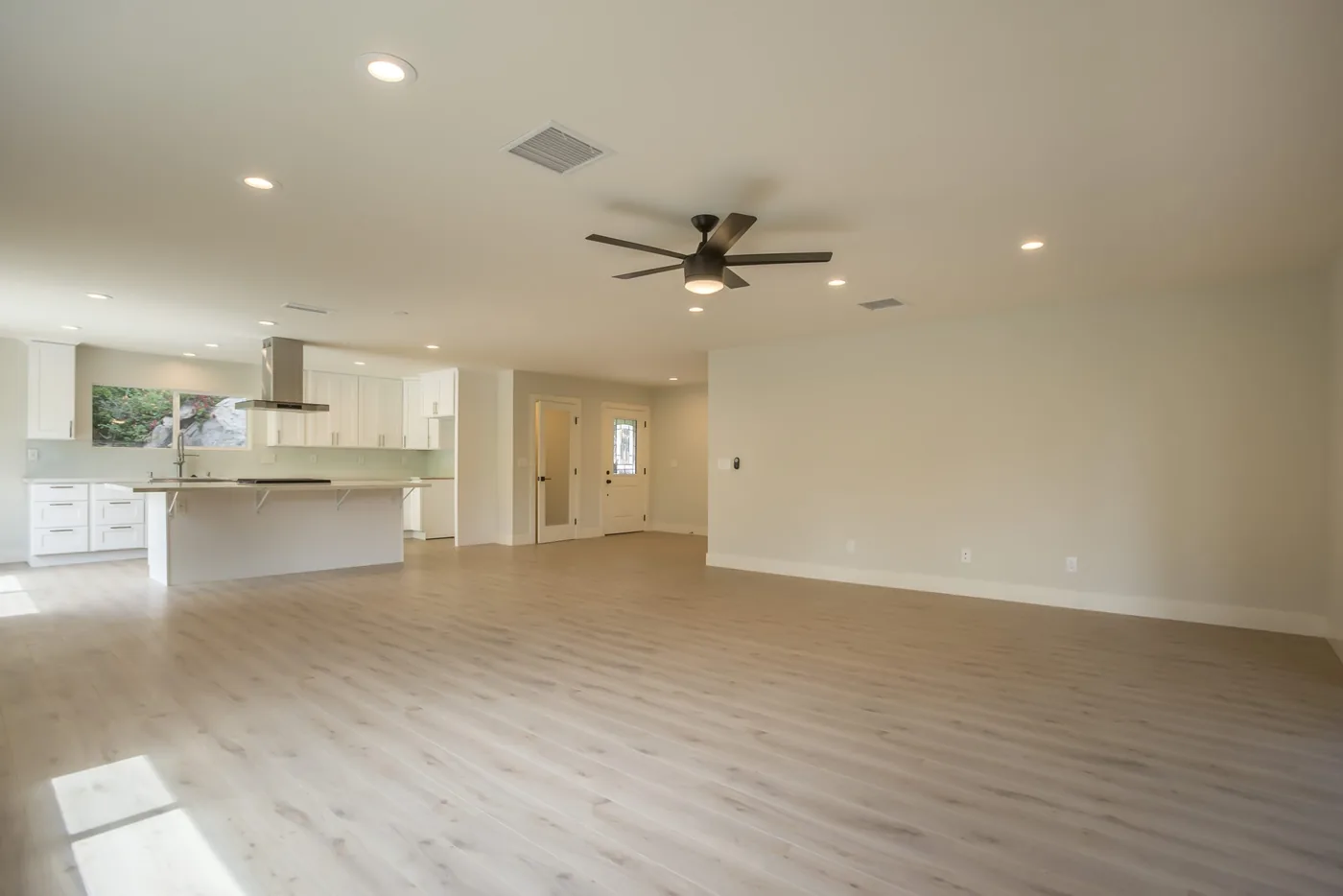
Rigid-core vinyl plank (often sold as SPC) is waterproof, which makes it the easy choice for a condo kitchen, bathroom or laundry closet. Click vinyl floats; glue-down vinyl is quieter underfoot but needs a building that allows adhesive.
Laminate costs the same to install as click vinyl and looks the part in living rooms and bedrooms. It doesn’t like standing water, so keep it out of the bathroom.
Some vinyl planks come with a pad already attached. Whether that pad meets your building’s rating depends on the product and the rule, so we check the sound-rating sheet before anything is ordered. If you’re torn between the two, read laminate vs vinyl plank.
Tile still belongs in condo entries and bathrooms. Herringbone and chevron are quoted per job; see herringbone and chevron.
What condo flooring costs in Toronto
These are our installation prices per square foot. The flooring itself is priced on top, depending on what you choose, and taking up the old floor is included.
So for a 700 square foot unit, installation comes to about $2,240 for laminate, click vinyl or floated engineered, about $3,430 for glued engineered hardwood, and about $3,850 for glue-down vinyl. The acoustic underlay is listed on the written quote, and the total is fixed before we start, so nothing gets added on the day. Full price lists are on our Toronto installation cost page and, for vinyl, vinyl installation cost.
Carpet is the one floor we supply but don’t install. If you’re replacing carpet with hardwood, vinyl or laminate, taking the carpet up is part of the job.
How a condo floor job runs
First we come to measure, free, and bring samples so you can see them in your own light. We check the slab for flatness, because a floating floor on an uneven slab creaks and moves at the joints.
Next you choose the floor, and we send you the underlay’s sound-rating sheet for the board along with our insurance and WSIB papers if the building asks. Wait for the approval in writing before the floor is ordered. Then we book the date around your service-elevator window.
On the day, the crew takes up the old floor, preps the slab, lays the underlay and the new floor, and fits the trims, cleaning up at the end of every day. Most units are done in one to three days. Workmanship is covered for up to two years, and residential floors carry 20 to 40 year manufacturer warranties.
We work across Toronto and the GTA, and as far as Wasaga Beach, Niagara Falls and Castleton.
Frequently asked questions
What is the best flooring for a condo in Toronto?
For most units, engineered hardwood in living areas and bedrooms, and waterproof rigid-core vinyl in the kitchen and bathroom, both over an acoustic underlay that meets your building’s sound rating. Laminate is a good lower-cost choice for dry rooms.
Can you put hardwood in a condo?
Engineered hardwood, yes. It floats over the underlay or glues down where the building allows it. Solid hardwood is nailed to a plywood subfloor, so on a concrete slab it usually isn’t an option.
Do I need condo board approval to replace my floors?
Usually, yes. Most buildings want a renovation request with the floor and underlay details before work starts. We give you the underlay’s sound-rating sheet for the board, plus our insurance and WSIB papers if they ask.
What sound rating does a Toronto condo floor need?
It depends on the building. The minimum IIC and STC ratings are in your condo’s rules, and they cover the floor and underlay together. Ask the property manager for the number, and we’ll match the underlay to it.
How much does it cost to replace flooring in a condo?
Installation is $3.20 per square foot for laminate, click vinyl or floated engineered hardwood, so about $2,240 for a 700 square foot unit, plus the flooring. Glued engineered is from $4.90 and glue-down vinyl $5.50. Removing the old floor is included.
Can you install flooring over heated floors in a condo?
Yes. Engineered hardwood is the floor we fit over radiant in-floor heating.
How long does condo flooring installation take?
Most units take one to three days once the board has approved the floor and the elevator is booked. The approval time depends on your building, so start the paperwork before you set a date.
Keep reading