Herringbone and chevron are the two patterns people ask us for by name. Both are laid board by board at an angle, both take longer than a straight floor, and both are quoted on the job rather than by a flat rate.
We supply and install them in hardwood, engineered hardwood, laminate and vinyl across Toronto and the GTA. Every quote is free and fixed in writing.
Why people are choosing it
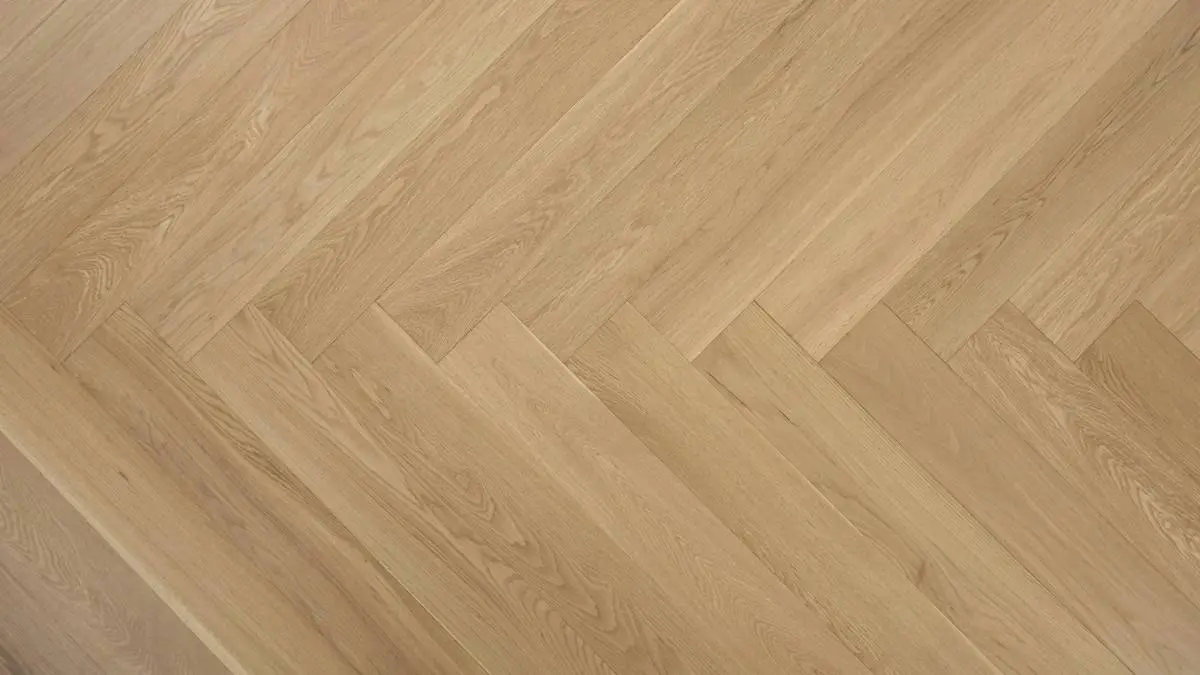
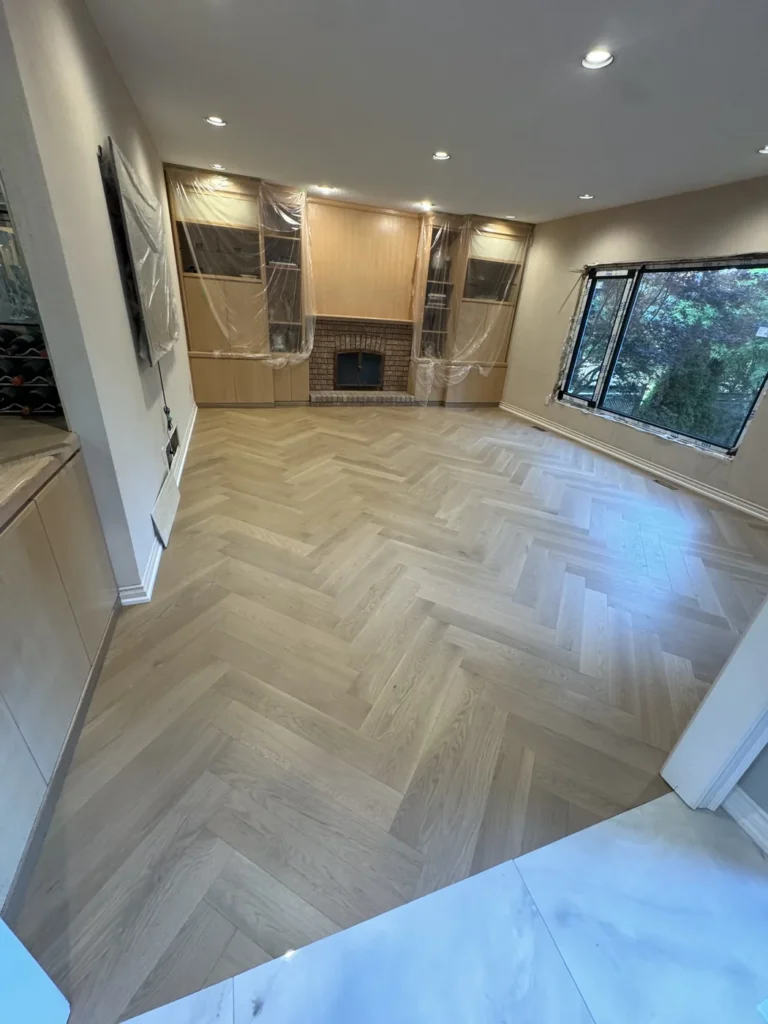
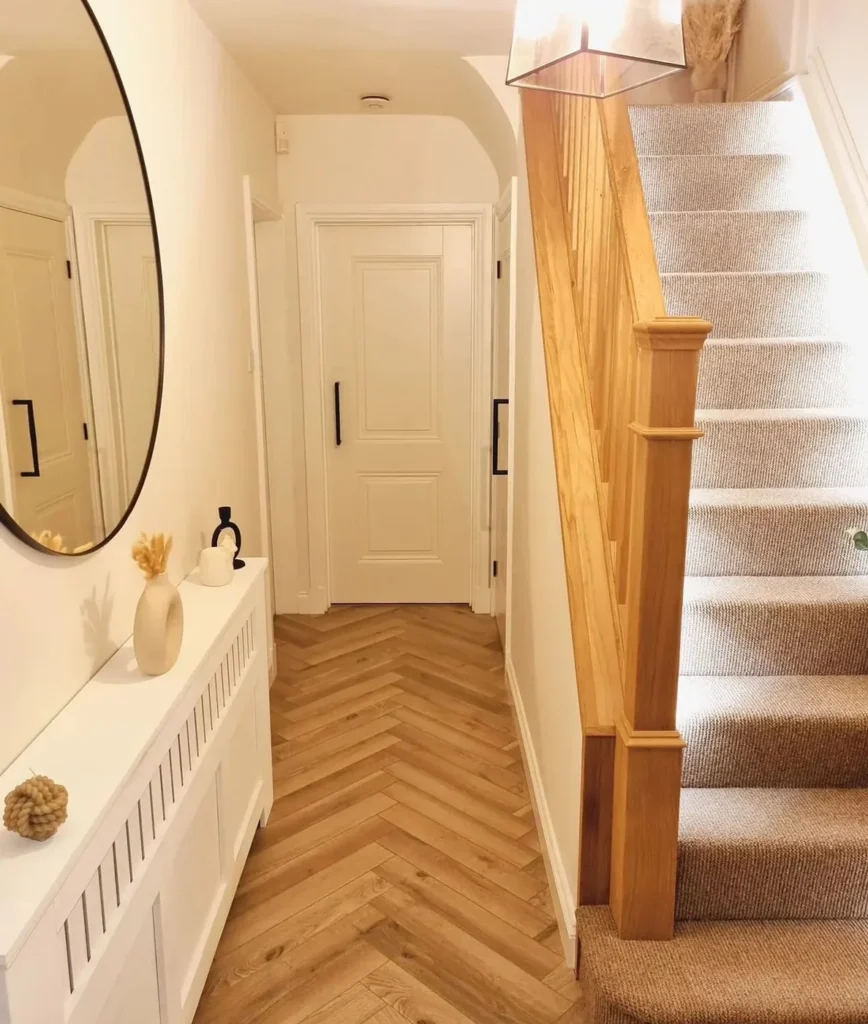
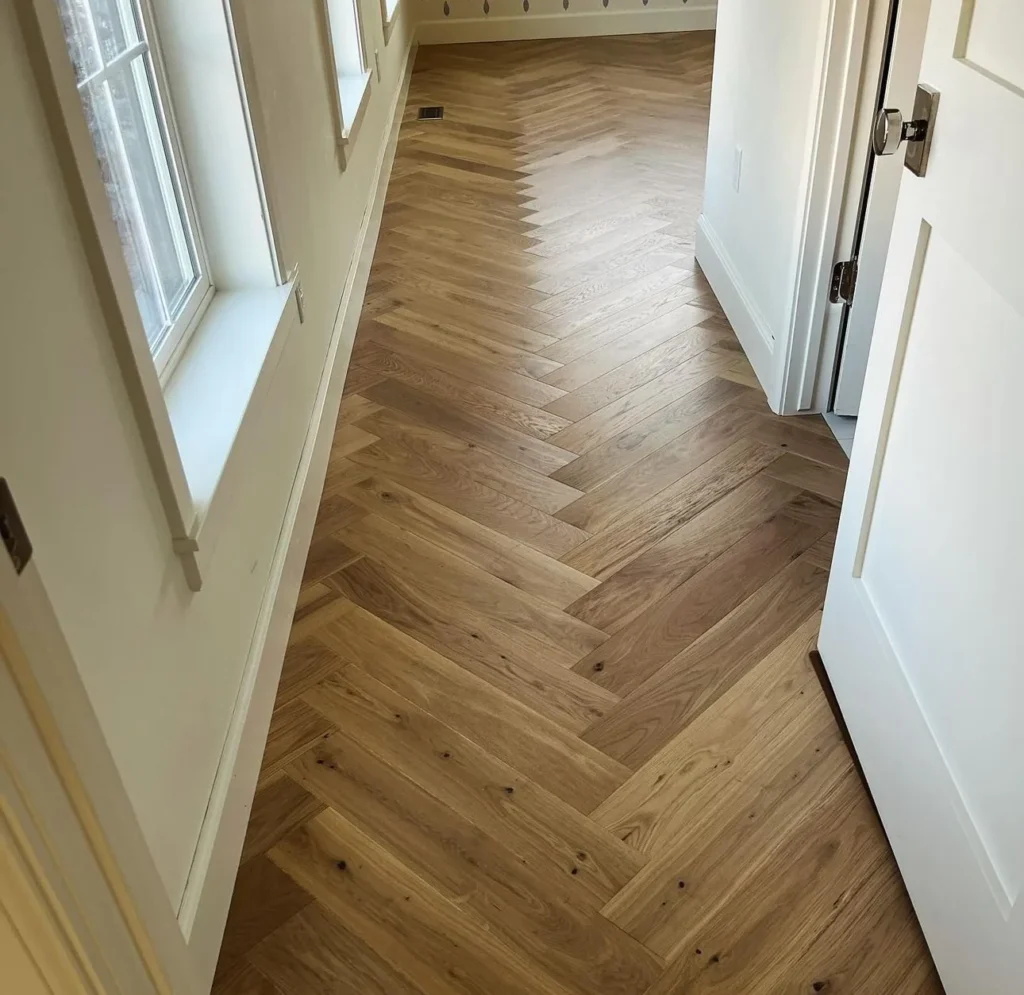
A herringbone floor is made of rectangular boards set at right angles to each other, so the pattern zigzags across the room. It reads as a finished, deliberate floor rather than a surface, which is why it turns up in hallways, front rooms and open main floors where the floor is the first thing you see.
It also does something practical. The pattern runs in two directions at once, so a narrow hallway or an awkward room reads wider than it is, and a long open plan stops looking like a corridor.
Herringbone or chevron
Herringbone uses plain rectangular boards. The end of one board meets the side of the next, so the joints step in a broken zigzag. Any straight board can be laid this way.
Chevron uses boards cut at an angle on both ends, usually 45 degrees. They meet point to point, so the pattern forms continuous unbroken V shapes running up the room. The boards are cut for it at the factory, so a chevron floor has to be bought as chevron.
Herringbone is the busier, more traditional look. Chevron is cleaner and more directional. We lay both, and we will show you samples of each before you decide.
What we lay it in
The pattern is not limited to solid wood. We carry over 80 herringbone, chevron and parquet products, so it can be done at most budgets:
Engineered hardwood is the most common choice. It holds its shape better than solid wood in a Toronto winter, which matters when boards meet at an angle. See the engineered range.
Solid hardwood for a main floor over plywood that you want to refinish decades from now.
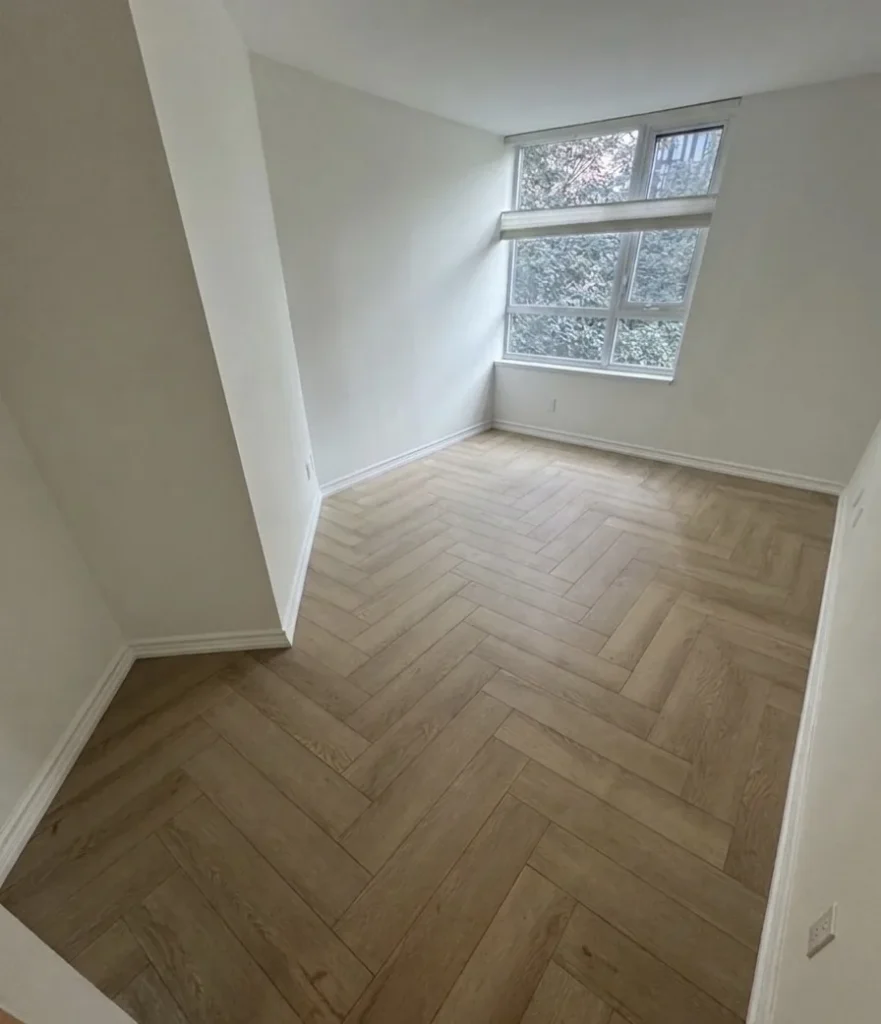
Laminate and vinyl in a herringbone cut, which is how a rental unit, a basement or a budget renovation gets the same pattern. See vinyl and laminate.
The photo here is a herringbone laminate floor we laid in Toronto. The pattern is the same; the material underneath is not.
What it costs, and what we check first
Herringbone and chevron are quoted per job. We do not put a square-foot rate on them, because the work is not proportional to the floor area. A small square room can be quicker than a large one with three doorways, and a pattern that has to be centred on a hallway costs more to set out than one that runs into a corner.
For reference, a straight-plank floor from us is $4.90 per square foot for engineered hardwood and $4.50 for solid, and the full price list is here. A pattern floor is more than that, and we put the number in writing before anything starts. The flooring itself is priced separately.
Three things we look at before quoting: how flat the subfloor is, because angled joints show a dip sooner than straight boards do; where the pattern should be centred, since a herringbone floor has a spine and it should line up with the room or the doorway you see first; and how much extra material to order, because angled cuts waste more than a straight lay.
Every project starts with a conversation. Tell us your room sizes, send a few photos, or just describe what you have in mind. We'll recommend the right flooring for how you live, give you honest pricing up front, and book a free in-home measure anywhere in Toronto and the GTA.
Choose from over 5,000 hardwood, engineered, vinyl plank, laminate and tile products at contractor pricing. We bring samples to your home so you can see them in your own light, and we'll tell you straight which floors hold up to kids, pets and Canadian winters.
Once your floor is chosen, we lock in an installation date that works around your schedule. You'll know exactly when we arrive and how long we'll need. Most homes are booked within a week or two, and everything is confirmed in writing before we order material.
Our installers handle the whole job: removing the old floor, prepping and levelling the subfloor, laying your new floor, and fitting trim and transitions. We clean up at the end of every day. Most homes are finished in one to three days.
Every project starts with a conversation. Tell us your room sizes, send a few photos, or just describe what you have in mind. We'll recommend the right flooring for how you live, give you honest pricing up front, and book a free in-home measure anywhere in Toronto and the GTA.
Choose from over 5,000 hardwood, engineered, vinyl plank, laminate and tile products at contractor pricing. We bring samples to your home so you can see them in your own light, and we'll tell you straight which floors hold up to kids, pets and Canadian winters.
Once your floor is chosen, we lock in an installation date that works around your schedule. You'll know exactly when we arrive and how long we'll need. Most homes are booked within a week or two, and everything is confirmed in writing before we order material.
Our installers handle the whole job: removing the old floor, prepping and levelling the subfloor, laying your new floor, and fitting trim and transitions. We clean up at the end of every day. Most homes are finished in one to three days.
How much does a herringbone floor cost to install in Toronto?
It is quoted per job. The work depends on the room shape, the doorways, where the pattern is centred and the material, not only the square footage. Send us the room sizes and we will put a fixed number in writing. A straight-plank floor from us is $4.90 per square foot for engineered hardwood and $4.50 for solid, and a pattern floor is more than that.
What is the difference between herringbone and chevron?
Herringbone uses plain rectangular boards, with the end of one meeting the side of the next, so the joints step in a zigzag. Chevron uses boards cut at an angle on both ends so they meet point to point in a continuous V. Chevron boards are cut that way at the factory, so the floor has to be bought as chevron.
Can herringbone go over concrete or radiant heat?
Yes, with engineered hardwood, vinyl or laminate rather than solid wood. We test the slab for moisture and check it is flat first. Angled joints sit over a dip more visibly than straight boards, so the subfloor matters more on a pattern floor.
Do you install herringbone laminate and vinyl as well as hardwood?
Yes. We carry over 80 herringbone, chevron and parquet products across hardwood, engineered hardwood, laminate and vinyl. The pattern is the same whichever you choose.
Does it need more material than a straight floor?
Yes. Angled cuts waste more, so we order extra on a pattern floor. We work the quantity out with you when we quote, and we order the whole job at once so every box comes from the same run.
Ready to get started?
Whether you’re just planning and budgeting, or are ready to start your next project. We’re here to help.