Blog / Flooring
Stair Stain Colours
Six stair stain colours on real GTA staircases, and how to pick one that matches your floor. Most people choose natural oak, and the colour doesn't change the price.
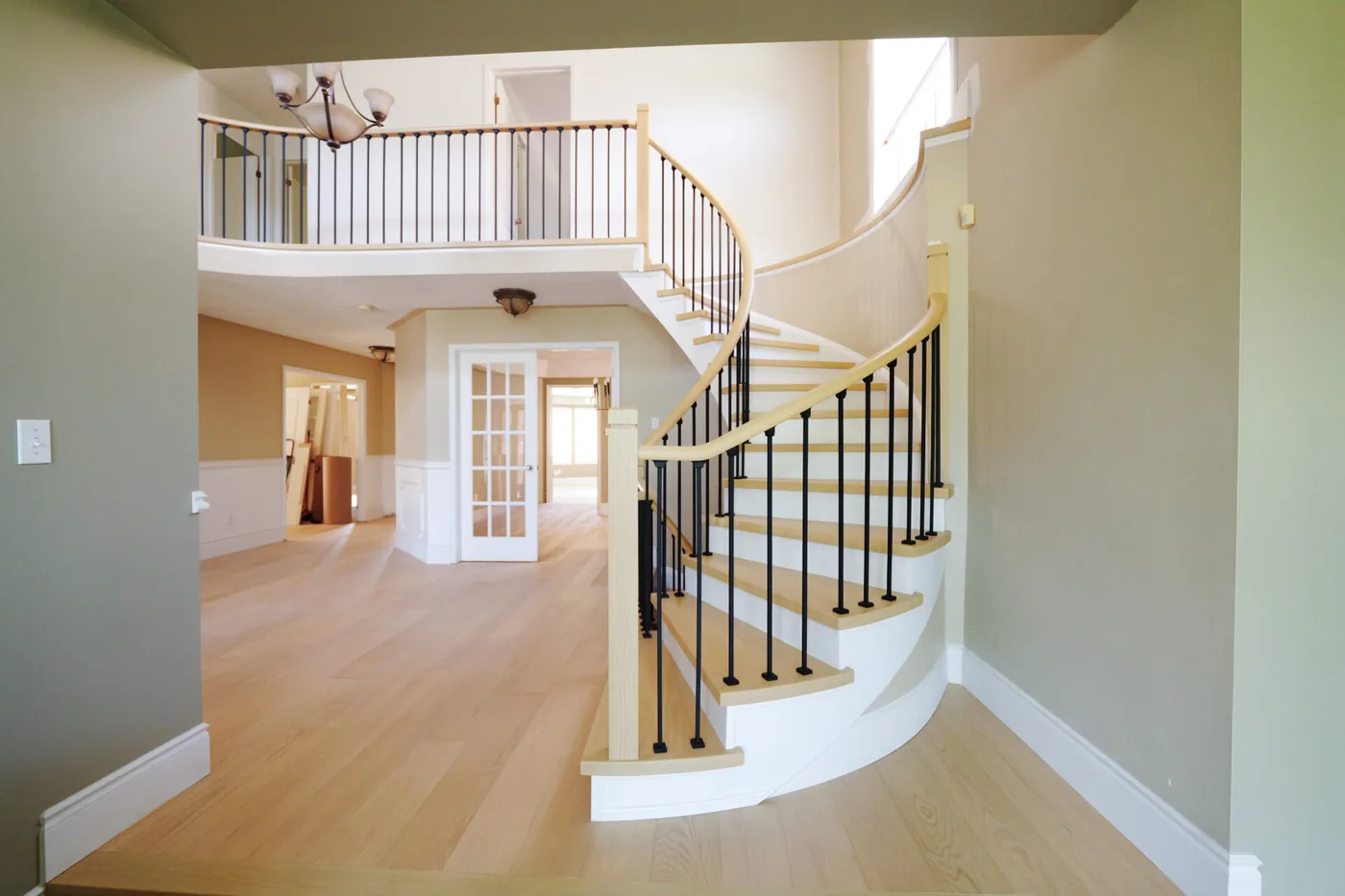
Quick answer
Stain charts show a chip on a white card. Your stairs sit in a hallway, with a floor at the top and another at the bottom. Below are six colours on staircases our crew finished across Toronto and the GTA, what each one looks like in a real house, and the rule that settles most of the choice before you open a sample tin. If you’re redoing the whole staircase, our staircase renovation guide for Toronto covers price and timing; this page is only about colour.
- Start with the floor, not the stain chart
- Six stair stain colours on real GTA staircases
- Natural oak stairs
- Warm honey stairs
- Greige stairs
- Grey stairs
- Espresso treads, white risers
- All-dark stairs
- How to choose a stain colour for your stairs
- Can you change the colour of the stairs you already have?
- What it costs
- Get a price for your stairs
- Frequently asked questions
Start with the floor, not the stain chart
Stair treads are usually stained and finished on site. A prefinished floor isn’t: its colour was applied at the factory. That’s why stairs bought separately from the floor rarely match, and the top step is where it shows.
So the first question isn’t “which colour do I like?” It’s “what are the stairs going to touch?” Match the treads to that floor in species, stain and sheen. If the floor is new, we order it and the stair wood together. If it has been down for years, it has changed colour, so before the flight goes in we stain a sample on the tread wood and check it against your floor. If a close match isn’t realistic, we’ll say so and suggest a deliberate contrast instead. There’s more on this in should stair treads match your floor?
One exception: if the floor is vinyl plank, the stairs usually get the same vinyl with a matching vinyl nosing rather than a stain. See vinyl plank on stairs.
Six stair stain colours on real GTA staircases
Here are the six looks, each on a staircase our crew finished: natural oak, warm honey, greige, grey, espresso treads with white risers, and all-dark. Every photo links to the job in our portfolio.
Natural oak stairs
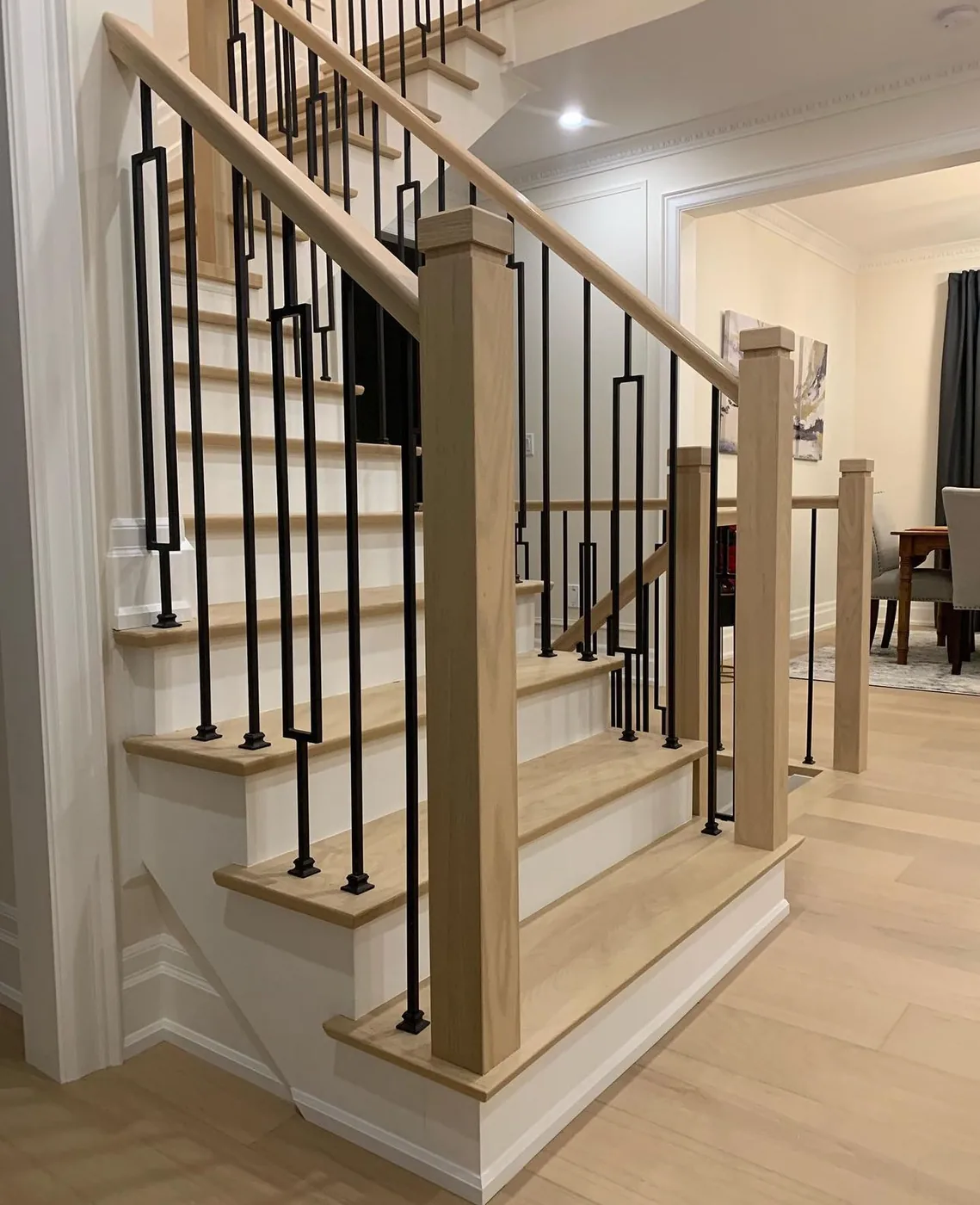
This is the look most people ask us for, and it shows in our work: about six in ten of the staircase photos in our portfolio are a light, natural oak like this one. It keeps a stairwell bright, and a light tread hides dust and everyday scuffs better than a dark one. The Bolton job in our tread-matching guide is the same idea in wire-brushed white oak.
Warm honey stairs
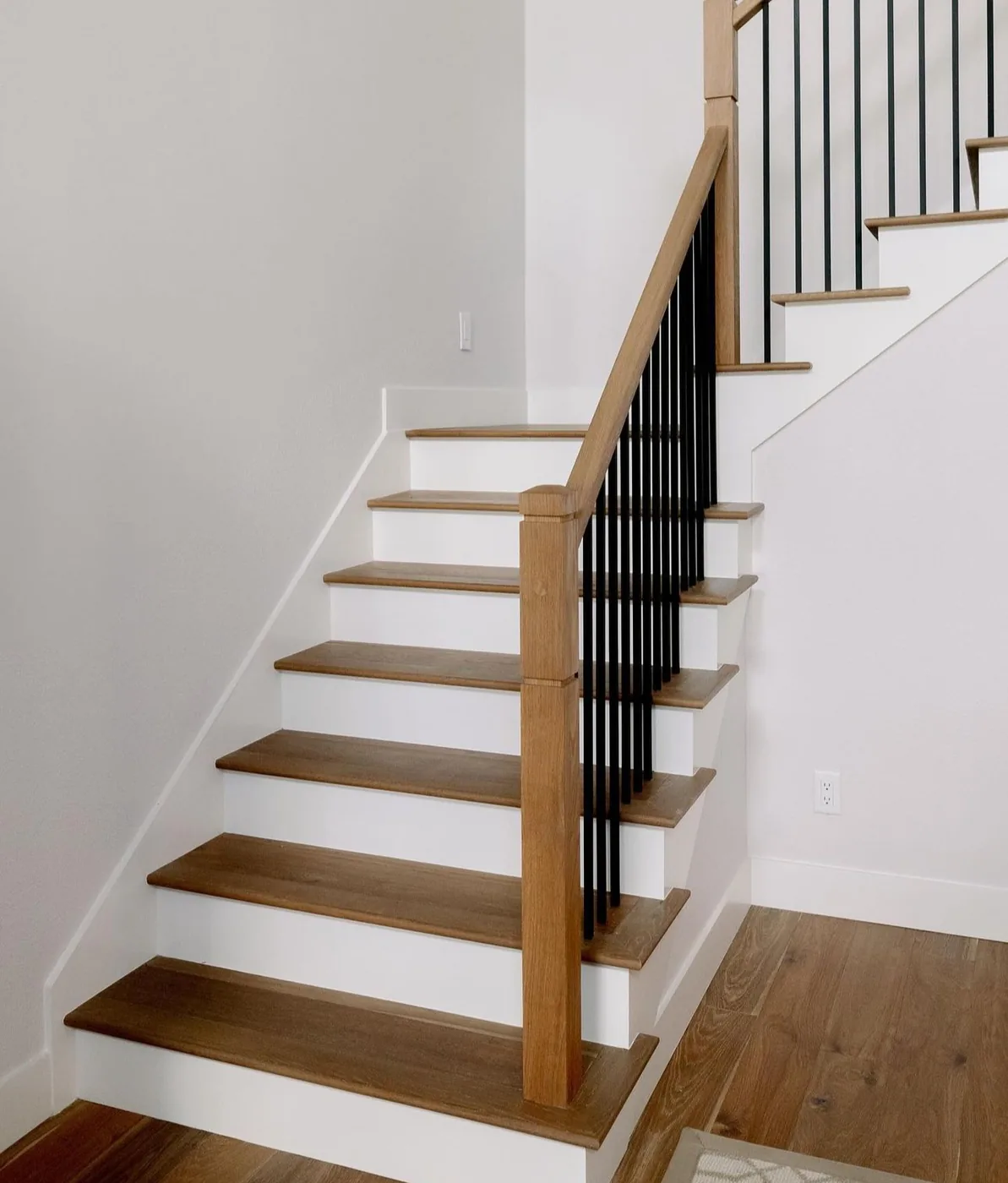
Look at the bottom step in this photo. The tread and the floor run together as one colour, which is the matching rule doing its job. Honey suits a house that already has warm oak floors or trim, where a pale or grey staircase would look like it came from a different house.
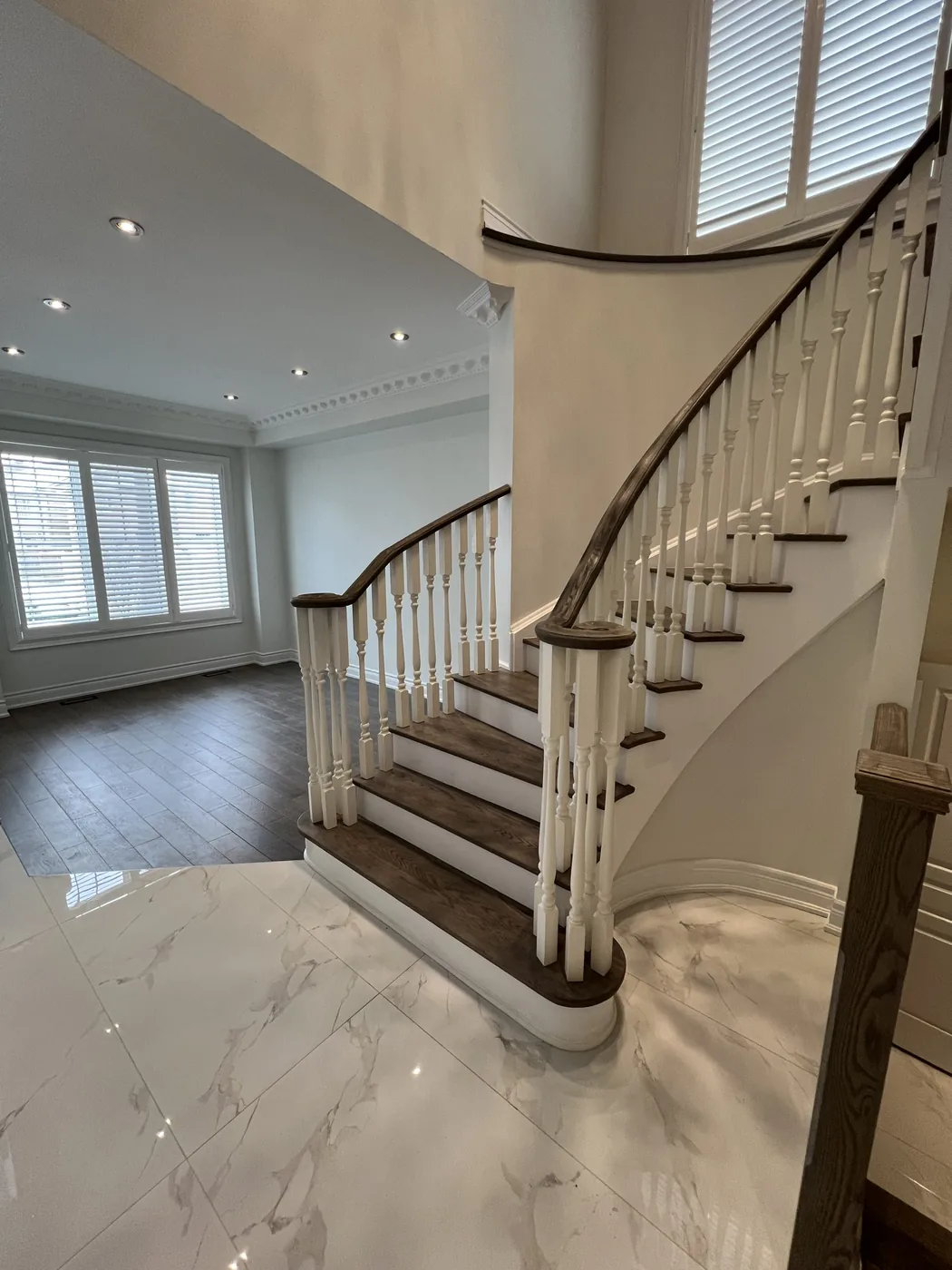
Greige stairs
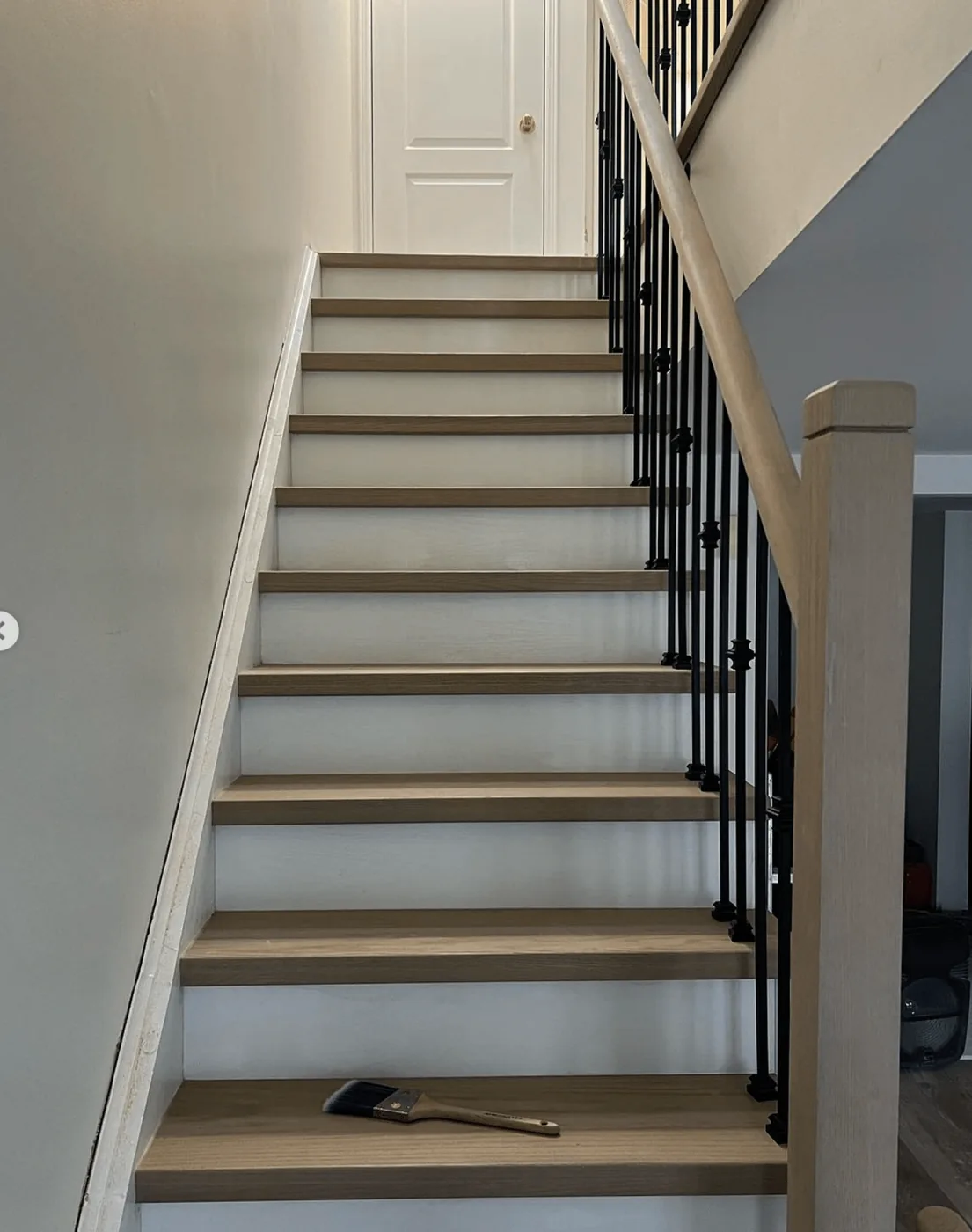
Greige sits between brown and grey. It’s the safe middle when the walls are cool grey or white but a full grey feels too cold for the rest of the house.
Grey stairs
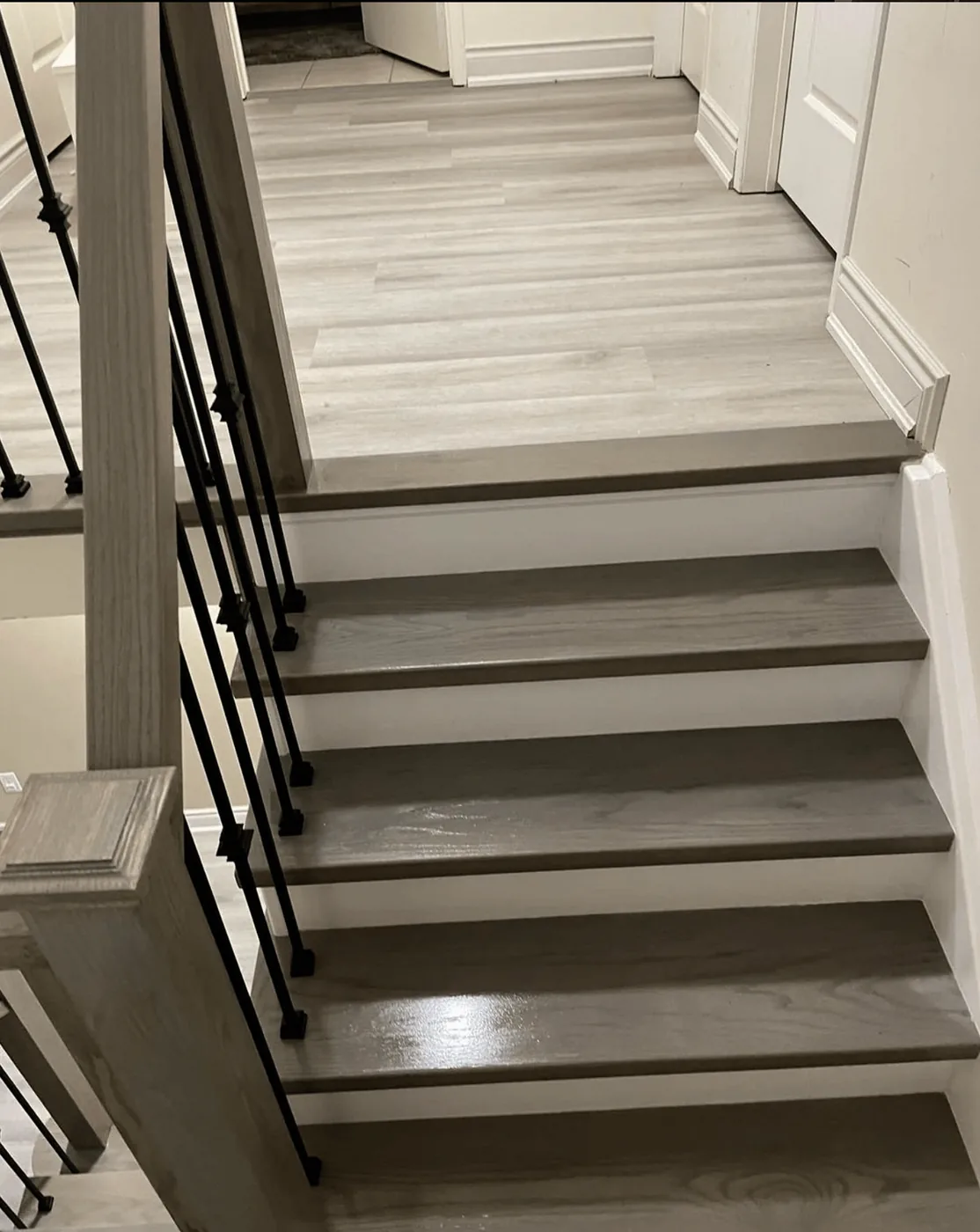
Grey is the colour to sample most carefully. Oak has its own undertone, and red oak in particular can push a grey stain toward pink or brown, so a chip on a card tells you very little. The treads we fit are white oak, and your sample is stained on that same wood.
Espresso treads, white risers
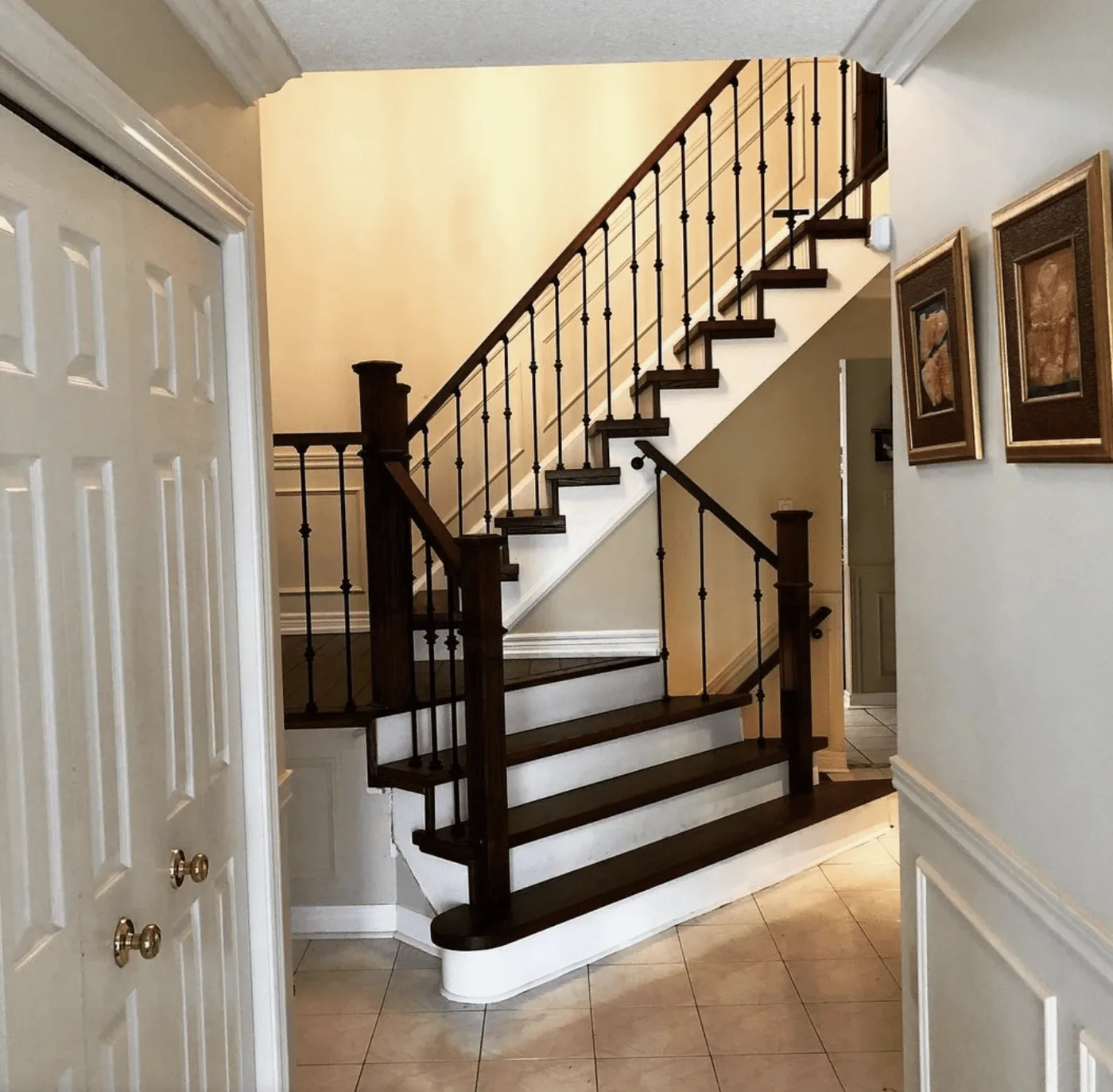
Two-tone is the classic way to go dark without making the stairwell feel heavy: the white risers break up every step, so the flight reads lighter than the tread colour alone. The trade-off is upkeep. Dark treads show dust, pet hair and scratches more than light ones, and on stairs you see the treads from above every time you come down.
All-dark stairs
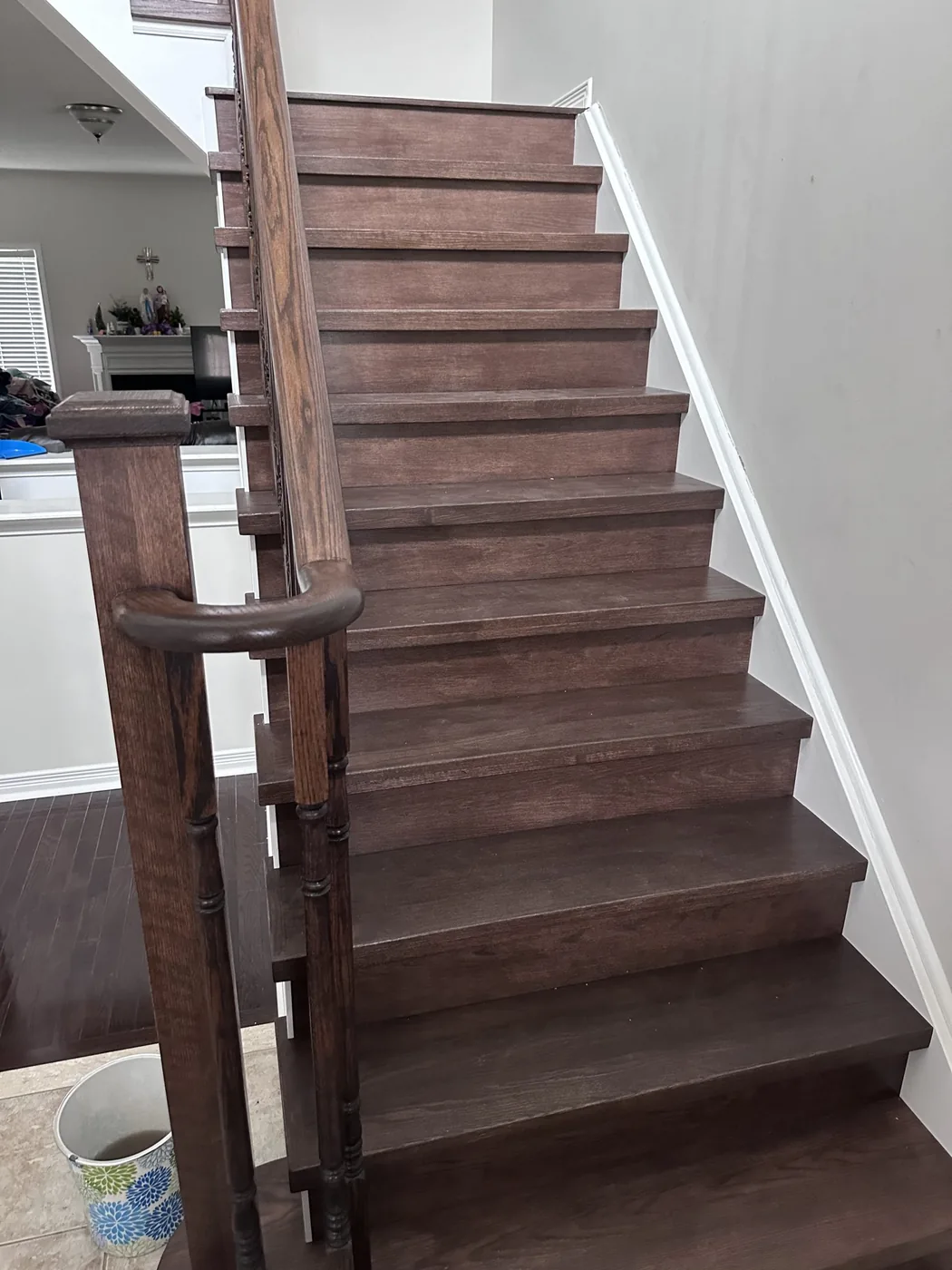
Here everything takes the same stain, so the staircase reads as one piece of furniture and ties into the dark floor beside it. It’s the most traditional of the six. Choose it when the floor is already dark; next to a light floor it can look heavy.
How to choose a stain colour for your stairs
- Match the floor the stairs meet. Check both ends: the hallway at the top and the floor at the bottom. If the floor is staying, we stain a sample to match it.
- Look in the stairwell, not the showroom. Hold the sample where the stairs actually are, in the light they actually get.
- Pick the contrast piece. White risers, black iron, wood or glass spindles, or a painted post carry the contrast. Our guide to replacing stair spindles shows the options.
- Think about who uses them. With kids and pets, a light or mid-tone tread hides dust and scratches better than espresso or charcoal.
- Sample on the real wood. Especially for grey or anything very light, a chip on a card isn’t enough.
Can you change the colour of the stairs you already have?
Often, yes. If the treads are solid hardwood and thick enough to sand, they can be refinished in a new colour. If they aren’t, or they’re carpeted builder-grade stairs, new hardwood treads and risers go over the old ones and take the new stain from the start. Refinishing runs about $6,000 to $7,000 a flight and recapping about $7,000, so the choice comes down to what’s under the old finish, not price. Our guide to stair recapping vs refinishing explains how to tell, and carpet to hardwood stairs covers the carpet side.
What it costs
The flight price covers taking the carpet off, new treads and risers, newel posts, spindles, the handrail and the stain. Natural, honey, grey or two-tone, the colour doesn’t change the price, and you can still use the stairs overnight between working days. Every price is fixed in writing after a free measure.
Get a price for your stairs
Send us a photo of your staircase and the floor it meets, and tell us the colour you have in mind. We’ll stain a sample on the tread wood, then measure and give you a fixed written price. We work across Toronto and the GTA, and as far as Wasaga Beach, Niagara Falls and Castleton.
Frequently asked questions
What is the most popular stain colour for stairs?
Light natural oak. It’s what most people ask us for, and about six in ten of the staircase photos in our portfolio show it. The rest are spread across honey, greige, grey, espresso with white risers, and all-dark.
Should stair treads be lighter or darker than the floor?
Neither, as a rule. Match the treads to the floor in species, stain and sheen, and put the contrast in the risers, spindles or railing.
What stain colour hides dust and scratches best on stairs?
Light and mid-tone natural finishes. Espresso, charcoal and very dark stains show dust, pet hair and scratches the most.
Can you stain new stairs to match an existing floor?
Usually. Before the flight goes in, we stain a sample on the tread wood and check it against your floor. If a close match isn’t realistic, we’ll tell you and suggest a deliberate contrast instead.
What stain colour goes with black spindles?
Black iron works with all six colours here. In our photos it sits with natural oak, honey, greige, grey and espresso treads.
Does the stain colour change the price of a staircase?
No. On a new staircase the stain is part of the flight price, about $7,000 for a typical hardwood flight and about $10,000 for a curved one, whatever colour you choose. Refinishing an existing hardwood flight runs about $6,000 to $7,000. Every price is fixed in writing after a free measure.
Keep reading