Blog / Flooring
Is Herringbone Flooring Worth It?
What herringbone costs over a straight floor, the rooms where it pays off, the ones where it doesn't, and the downsides we talk through at every measure.
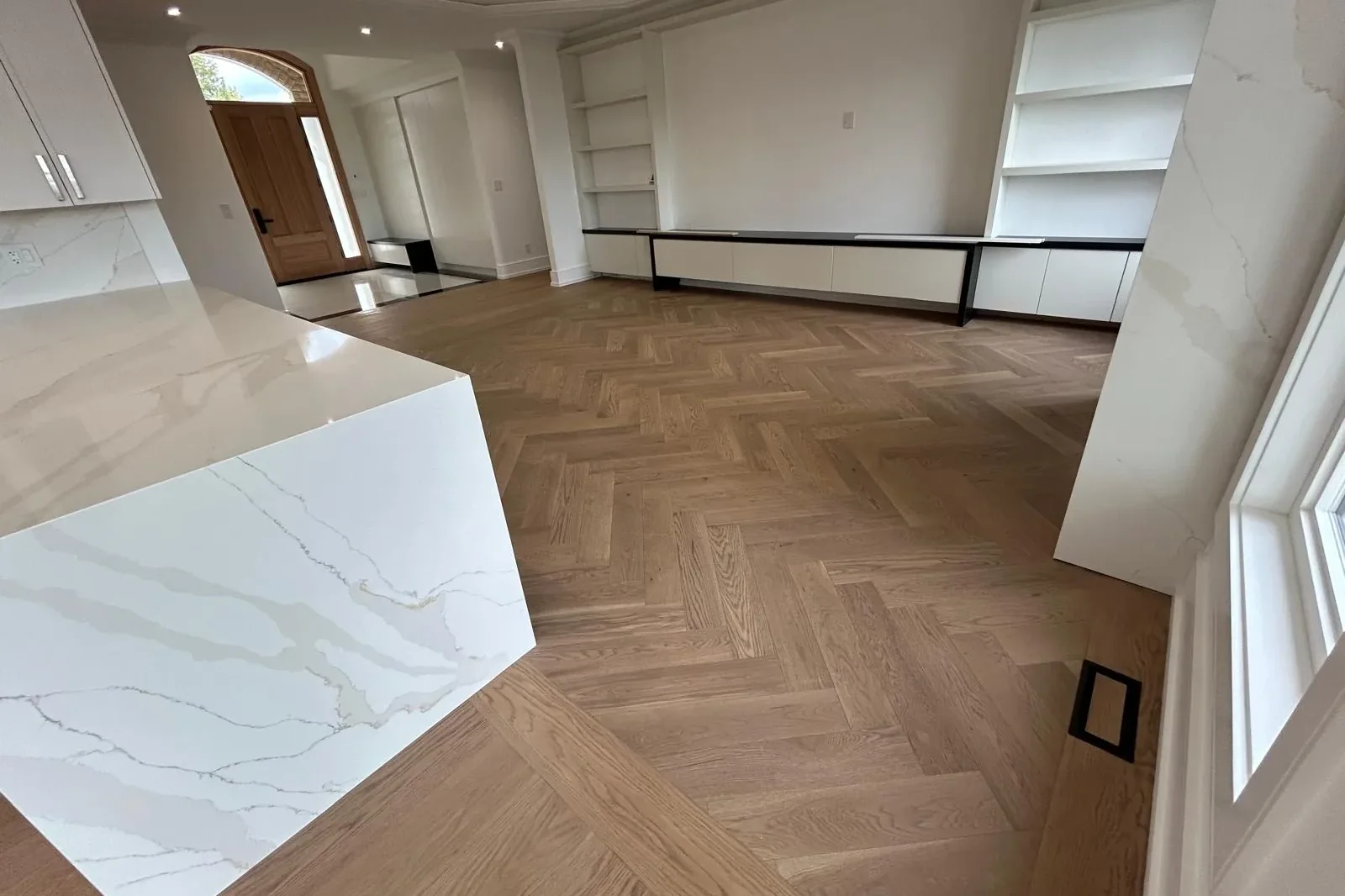
Quick answer
That’s the short answer from the crew that lays it. The rest covers what you’re actually paying extra for, where the pattern earns its keep, the downsides worth knowing before you commit, and whether it’s going out of style. If you already know you want it, our herringbone and chevron installation page has the floors we carry and how the quote works.
Why herringbone costs more than a straight floor
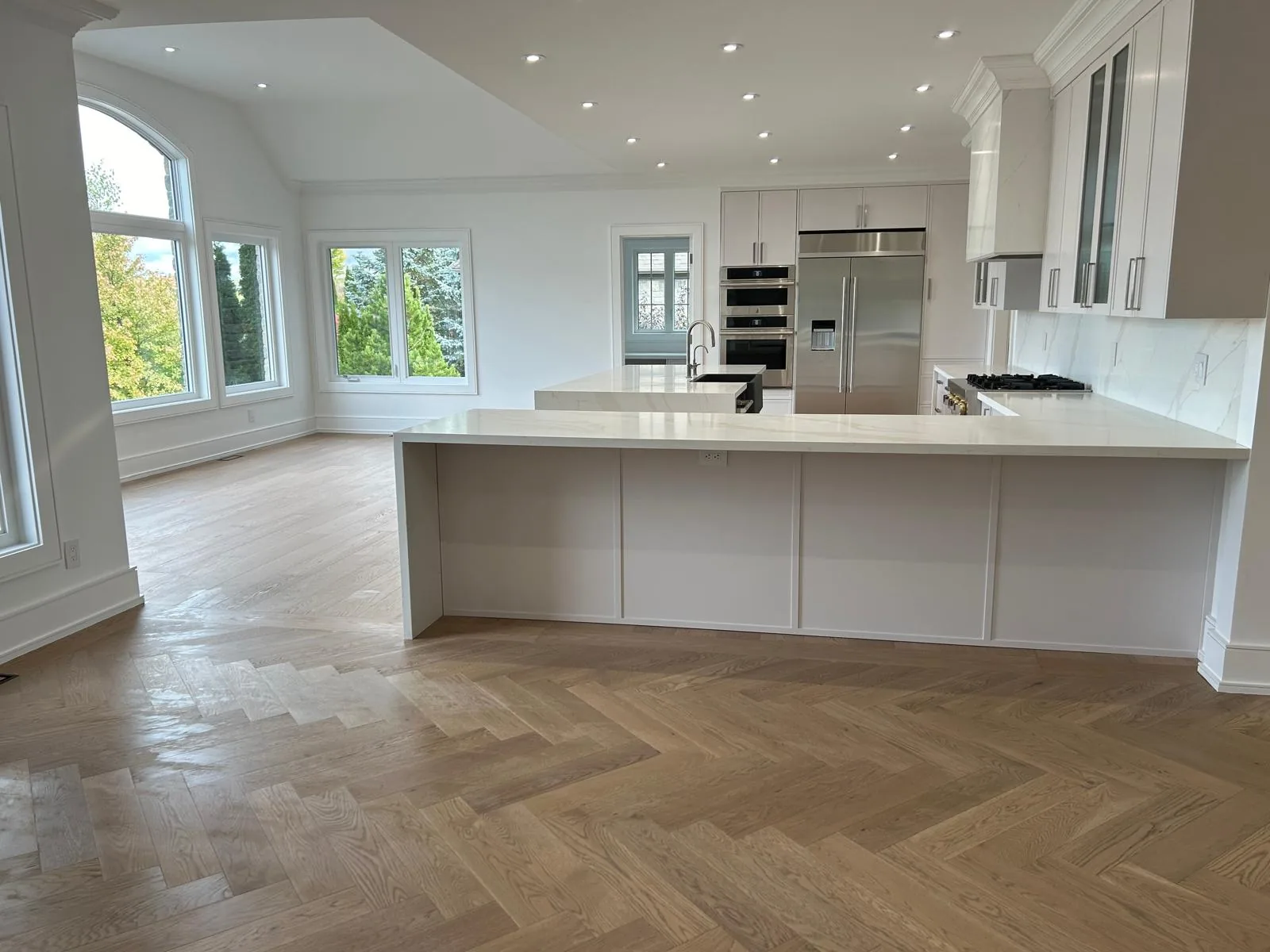
The extra goes into four things:
- Every board is set at an angle. A straight floor runs off one wall. Herringbone is built board by board in two directions, so it takes longer than a straight floor of the same size.
- The layout comes first. A herringbone floor has a spine, and it should line up with the room or the doorway you see first. That centre line is set out before the first board goes down.
- More material is cut away. Every edge along a wall ends in an angled cut, so you order more spare material than you would for a straight lay.
- The subfloor has to be flatter. Angled joints show a dip sooner than straight boards do, so levelling matters more. Any levelling is on your written quote.
Here’s how that compares with what we charge for a straight floor:
Why no square-foot rate for herringbone? Because the work doesn’t scale with the floor area. A small square room can be quicker than a large one with three doorways, and a pattern centred on a hallway takes more setting out than one that runs into a corner. Every straight-floor rate is on our Toronto installation cost page.
Where herringbone is worth it
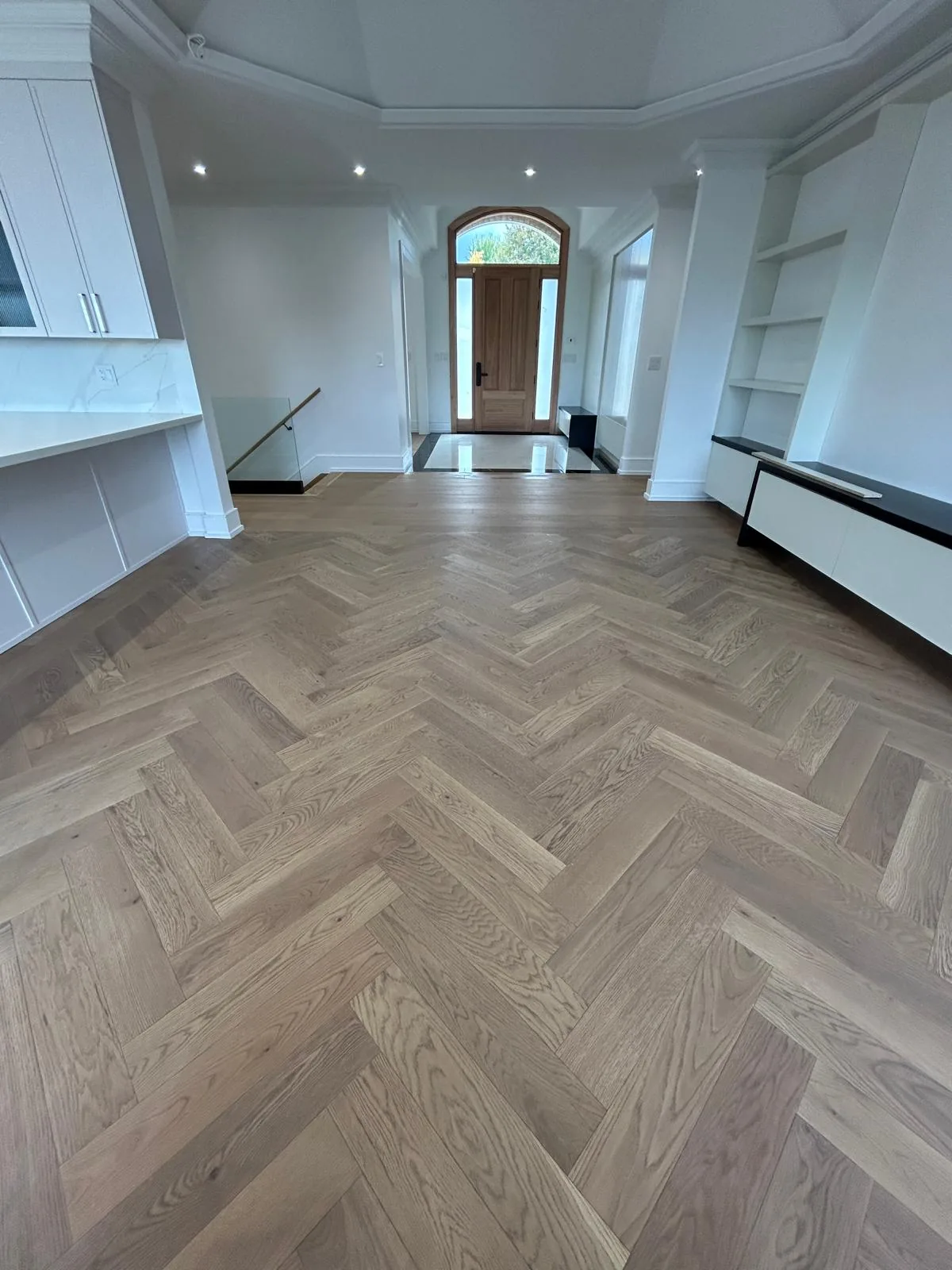
Put it where the floor is the first thing anyone sees.
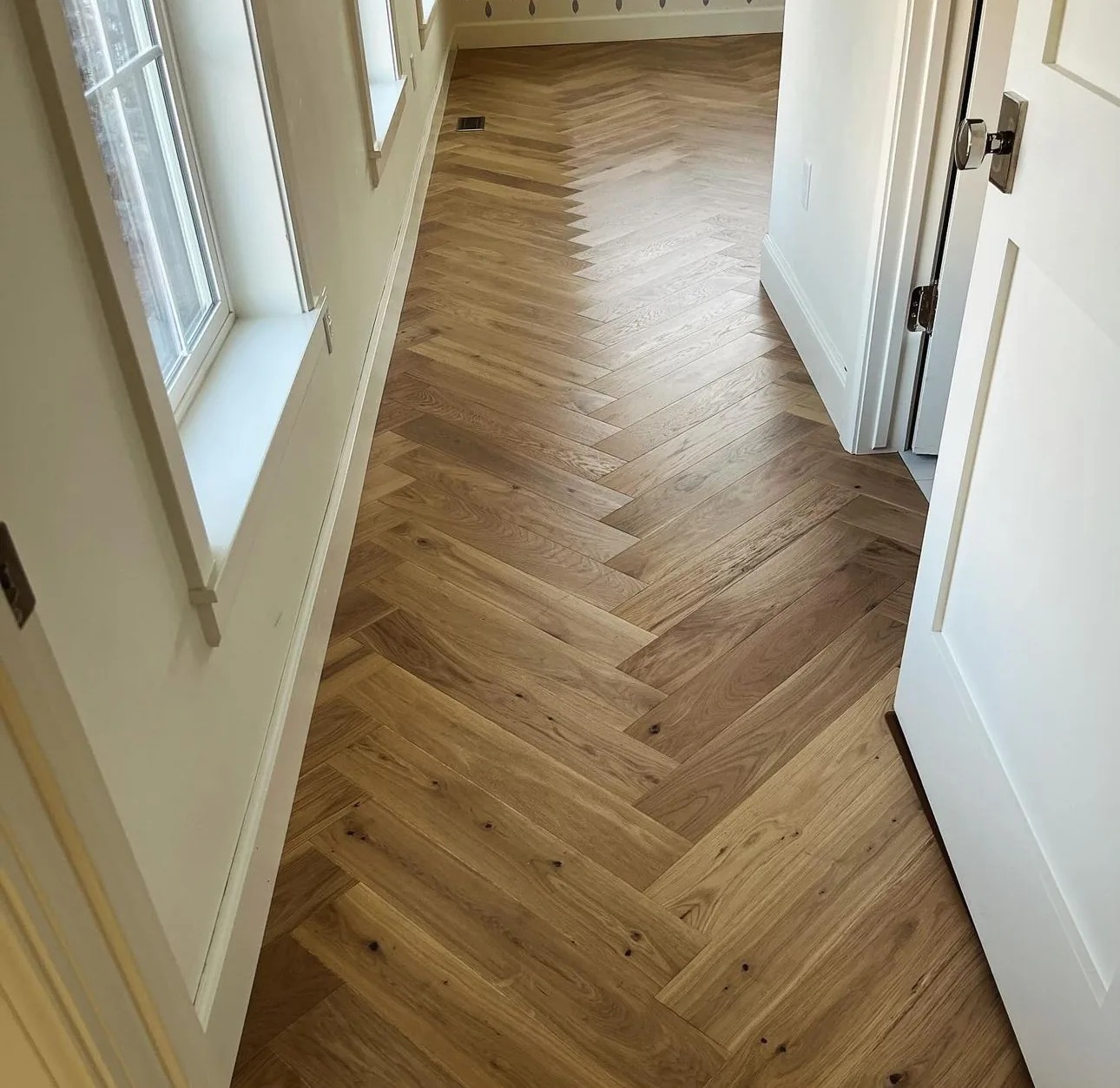
- Front halls and hallways. The pattern runs in two directions at once, so a narrow hall reads wider than it is.
- Living rooms and open main floors. A long open plan stops looking like a corridor, and the floor reads as a deliberate choice rather than a surface.
- A kitchen that opens onto the living room, where one pattern running through both ties the space together.
- A home you plan to stay in. You pay for the pattern once and see it every day, so it makes the most sense where you’ll be living with it for years.
On a main floor, engineered hardwood is the usual choice. It holds its shape better than solid wood through a Toronto winter, and that matters when boards meet at an angle. If the room sits over plywood and you want a floor you can sand and refinish decades from now, solid hardwood is the other option. Still deciding? Here’s engineered vs solid hardwood.
Where it’s harder to justify
- Rooms you’ll mostly cover. If a bed, a sectional and a big rug will sit on most of the floor, you’re paying for a pattern nobody sees.
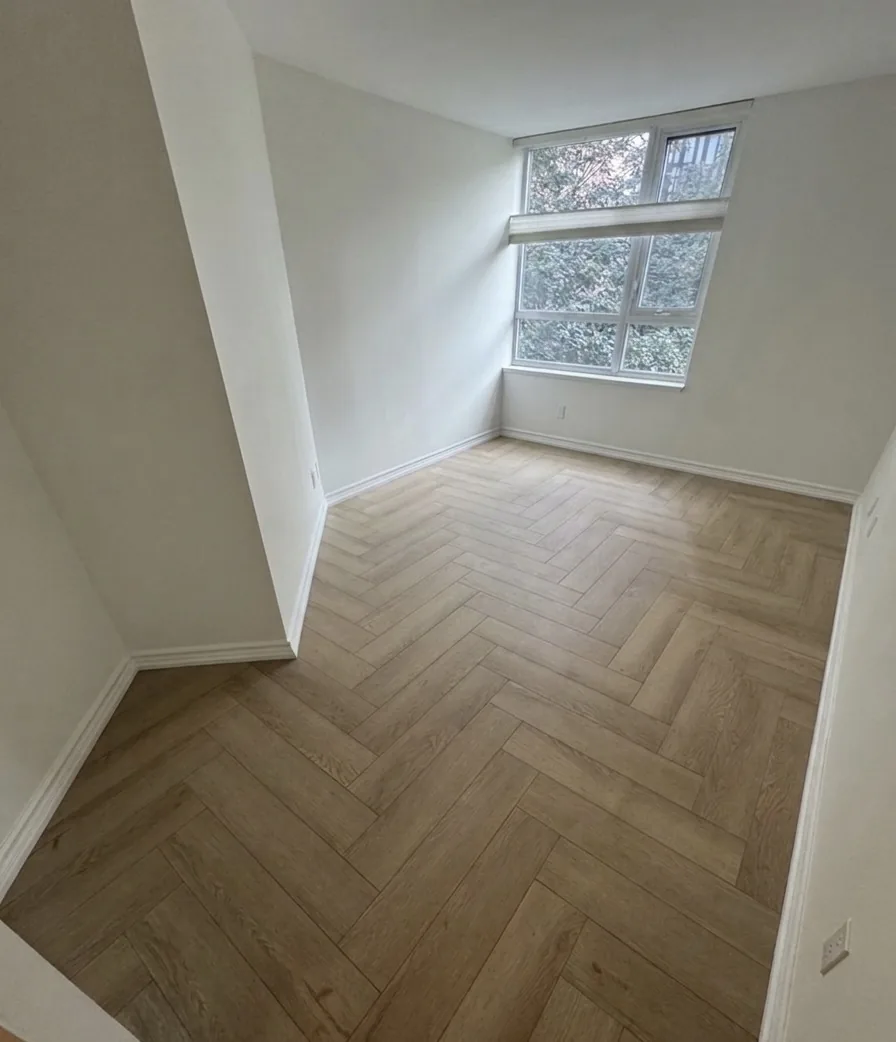
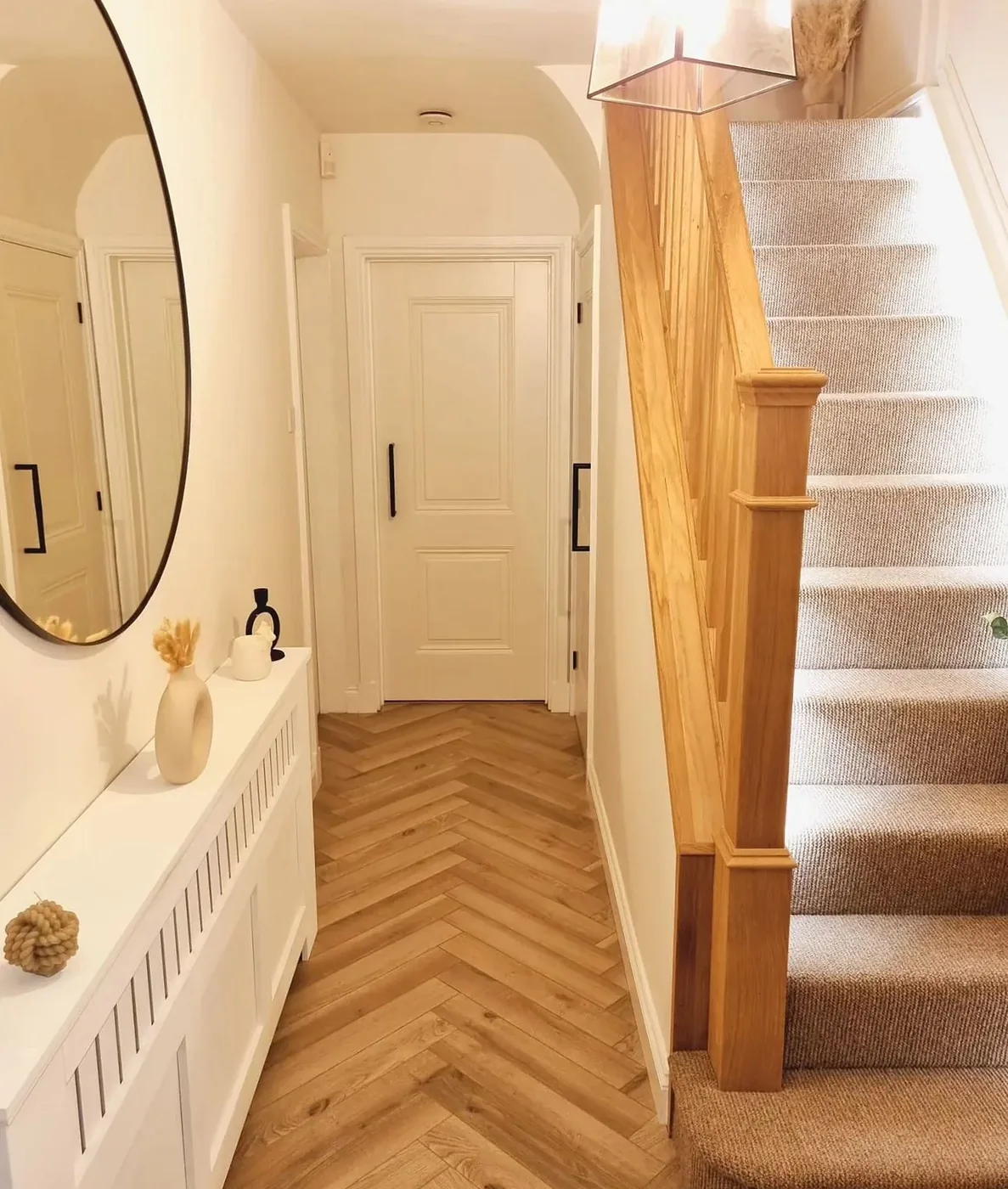
- Basements and rentals on a tight budget. The pattern still works here, just in a different material. Herringbone also comes in laminate and in vinyl, which is how a basement or a rental unit gets the same look for a lower material cost.
- Small rooms with a lot of doorways. Every doorway is another place the pattern has to be cut and finished, so a small room can cost more to lay than its size suggests.
The photo above is herringbone laminate we laid in Toronto. The pattern is the same; the material underneath is not. If you’re choosing between the two budget options, here’s laminate vs vinyl plank.
Downsides of herringbone
These are the ones we talk through at the measure:
- It costs more to install than a straight floor, for the reasons above.
- It takes longer. You’ll get the number of days with your quote, so you can plan around it.
- The centre line is permanent. If the spine is off from the room or the doorway you see first, you’ll notice it every day. That’s why it’s set out before anything is glued or nailed.
- It shows a poor subfloor. A dip that a straight floor would hide can show along the angled joints.
- It’s a busy pattern. In a room that already has a strong tile or a patterned wall, herringbone can compete with it. Chevron is the calmer of the two.
- The edges need planning. Where herringbone meets the stairs, a tiled kitchen or the next room, it needs a clean border or transition, worked out before installation.
Herringbone or chevron?
Herringbone uses plain rectangular boards. The end of one board meets the side of the next, so the joints step in a broken zigzag.
Chevron boards are cut at an angle on both ends, usually 45 degrees, and meet point to point in clean, unbroken V shapes running up the room. They’re cut that way at the factory, so a chevron floor has to be bought as chevron.
Herringbone is the busier, more traditional look. Chevron is cleaner and more directional. We bring samples of both to the measure so you can see them in your own light.
Is herringbone going out of style?
Herringbone has been laid in European homes for hundreds of years, which is a longer run than most floor trends get. It’s still one of the two patterns people ask us for by name.
Nobody can promise what buyers will want in ten years, and we won’t pretend a pattern adds a set amount to your home’s value. What we can tell you is what we’re installing: most of the herringbone in our recent jobs is light white oak, like the floors on this page. If you’re worried about it dating, keep the colour simple and let the pattern do the work.
Herringbone floors we’ve laid
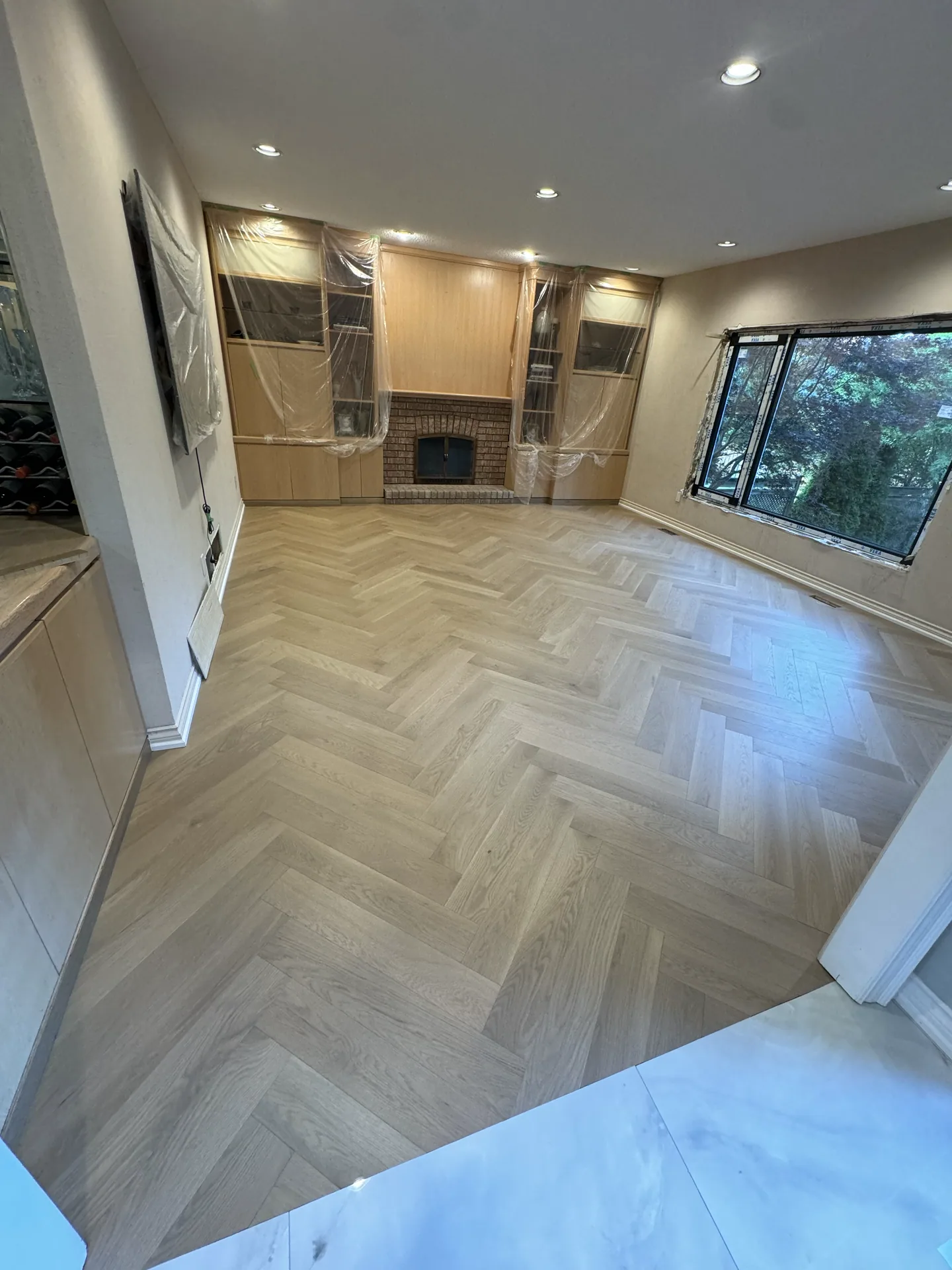
Real floors our crew has laid, not catalogue photos:
- Herringbone living room in Toronto
- Herringbone kitchen in Toronto
- White oak herringbone beside a waterfall island in Toronto
- Herringbone hardwood in Richmond Hill
- Walnut herringbone in Toronto
More on our work page.
Get a price for herringbone
Send us the room sizes and a few photos, and tell us which room you see first when you walk in. We’ll come out to measure for free, show you herringbone and chevron samples, and give you a fixed price in writing. We install across Toronto and the GTA.
Frequently asked questions
Is herringbone flooring more expensive than a regular floor?
Yes, to install. With us a straight engineered hardwood floor is $4.90 per square foot installed and solid hardwood is $4.50, both with old floor removal included. Herringbone and chevron are quoted per job, because the work depends on the room’s shape, the doorways and where the pattern is centred, not just the square footage. The quote is fixed in writing.
What are the disadvantages of herringbone flooring?
It costs more and takes longer to install than a straight floor, it needs a flatter subfloor, and the centre line has to be right because it can’t be moved later. In a room with a strong tile or patterned wall, it can compete with them.
Is herringbone out of style in 2026?
No. It has been laid for hundreds of years and is still one of the two patterns people ask us for by name. Most of the herringbone we install now is light white oak.
Does herringbone make a room look bigger?
It can make a narrow room or hallway read wider, because the pattern runs in two directions at once. In a long open plan it stops the room looking like a corridor.
Can you get herringbone in vinyl or laminate?
Yes. We supply and install herringbone in hardwood, engineered hardwood, laminate and vinyl, so the pattern can go into a basement or a rental as well as a main floor.
Which is better, herringbone or chevron?
Neither is better. Herringbone uses rectangular boards in a broken zigzag and looks busier and more traditional. Chevron uses boards cut at an angle and forms clean V shapes, which looks calmer and more directional.
Keep reading