Blog / Flooring
Lucid Flooring Review (2026)
An installer’s look at Lucid: 20 engineered American oak floors in twin plank and herringbone collections, all nail-and-glue and rated for use below grade.
Quick answer
- Where the numbers come from
- The range side by side
- Half the range is herringbone, and that changes the job
- Nail and glue only, at ¾” thick
- Rated below grade, but the slab still has to be ready
- What to check before you buy
- What it costs installed
- Buying Lucid flooring in Toronto
- Every Lucid floor we carry
- Frequently asked questions
Where the numbers come from
Every figure below comes from the spec sheets of the 20 Lucid floors on our site as of November 2026. Where a sheet does not state something, we say so rather than fill the gap. We have not run our own wear tests and we do not give star ratings.
The range side by side
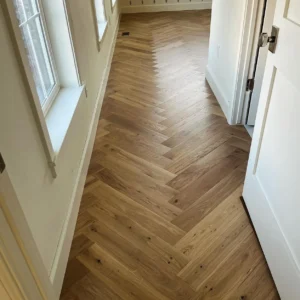
Half the range is herringbone, and that changes the job
Lucid splits its 20 floors evenly: 10 in the Planks Collection and 10 in the Herringbone Collection. The same ten names appear in both, from Tranquil and Soothe to Pure and Bare.
That pairing is the most useful thing about the brand. You can lay herringbone in a living room or front hall and run straight planks through the kitchen and bedrooms in the same design, so the house reads as one floor with a change of pattern rather than two unrelated woods. Check the two side by side with samples before you commit, since a herringbone block and a long plank can show grain and colour differently.
Herringbone is slower to install than planks. The pattern has to be set out from a centre line, every row is cut at the walls, and there is more waste at the edges of a room. Plan for that in your order and your schedule.
Nail and glue only, at ¾” thick
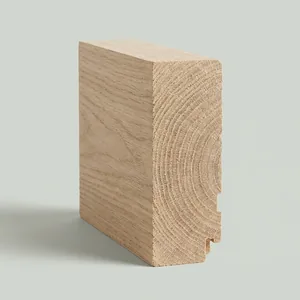
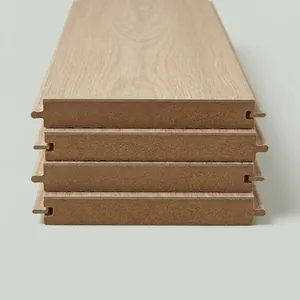
Every Lucid sheet lists Nail & Glue with a tongue-and-groove edge and no underlayment. There is no click system, so this is not a floating floor. Over a plywood subfloor the boards are nailed; over a concrete slab they are glued down.
At ¾” thick, this is a substantial floor. Where it meets tile, carpet or an existing floor, expect a transition strip, and check that doors will still swing over it, especially closet and bathroom doors that were trimmed for a thinner floor. Accessories on every sheet are listed as custom order, so ask about stair nosings and reducers early rather than at the end of the job.
In a condo, the building will usually want an acoustic layer under a glued wood floor. The sheets do not list one, so get your board’s requirements in writing before choosing Lucid for a suite.
Rated below grade, but the slab still has to be ready
Every sheet rates Lucid for on, above or below grade. That widens where an oak floor can go in a Toronto house, including a finished basement, because engineered construction stays flatter through humidity swings than solid wood.
The rating assumes a dry, flat slab. Basement concrete in older Toronto homes can carry moisture, and a glued wood floor will show it as cupping or loose boards. We test the slab while we measure, and a moisture barrier or levelling may be needed first.
The sheets do not mention in-floor heating, so treat radiant heat as a question for the supplier before ordering.
What to check before you buy
Nail or glue. Confirm whether your subfloor is wood or concrete, since Lucid is installed by nail and glue only and cannot be floated.
Height at the doorways. At ¾” thick, check transitions to tile and the clearance under every door before the boards go down.
Warranty and veneer in writing. Neither the warranty nor the wear layer thickness is stated on the sheets we hold, so ask for both before you order.
What it costs installed
Engineered hardwood is from $4.90 per square foot nailed or glued, including glue and nails. Herringbone and other patterns are quoted per job. This is installation only; the floor itself, disposal, trim and levelling are priced on top, and the full list is on our flooring installation cost page. For how we install it, see our page on hardwood flooring installation in Toronto.
Browse Lucid in our shop: engineered hardwood. Send us your square footage for a free quote.
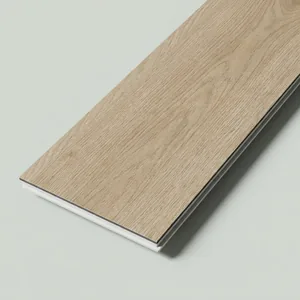
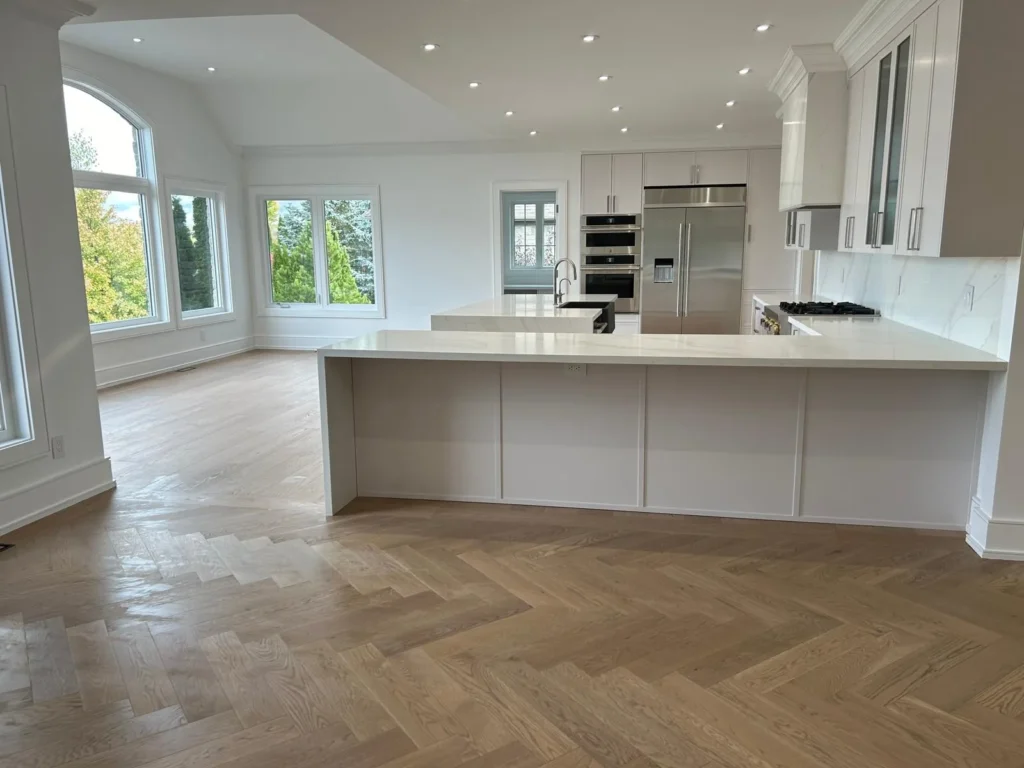
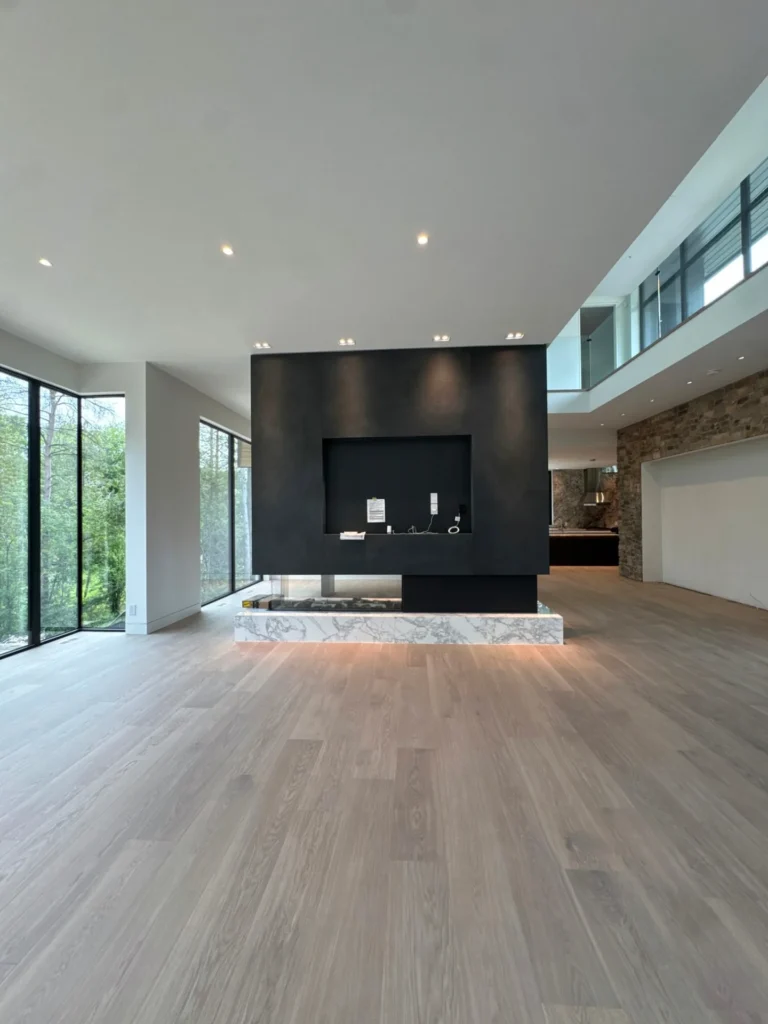
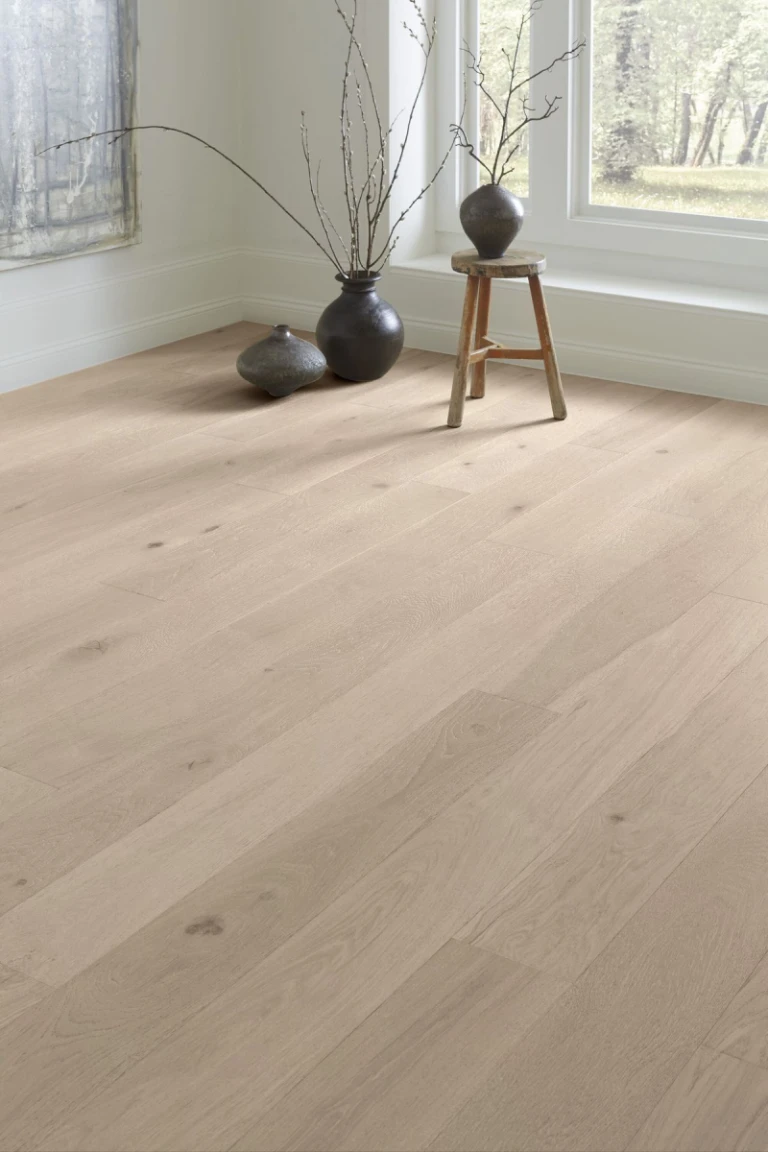
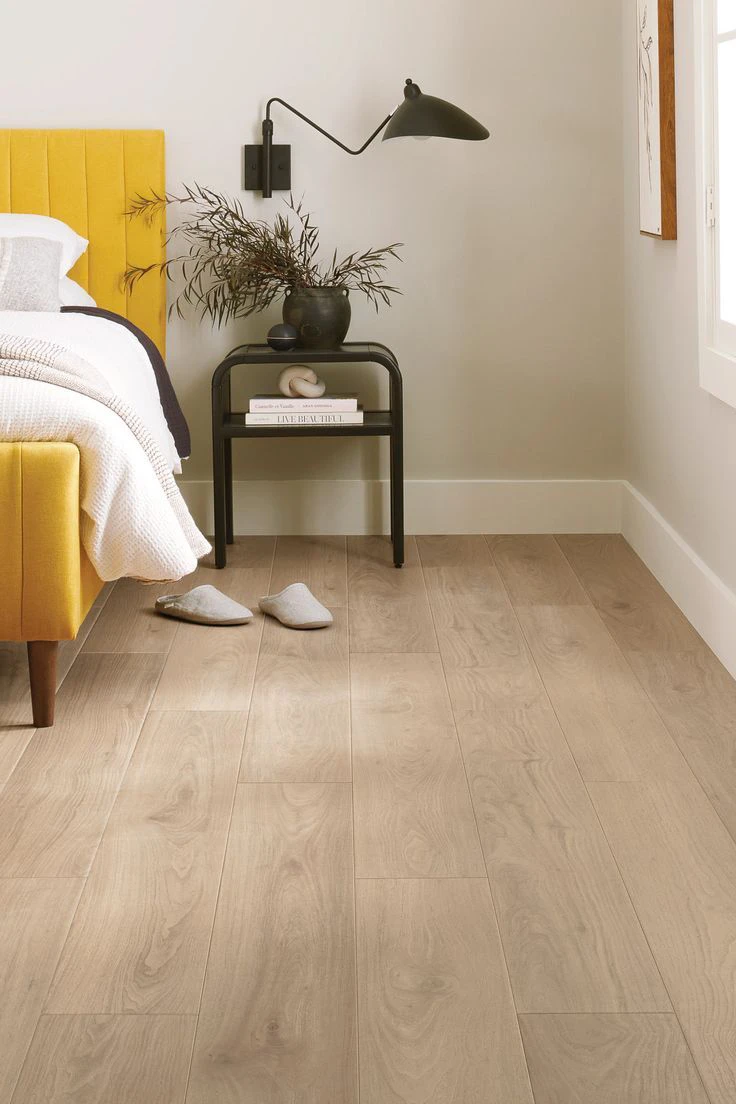
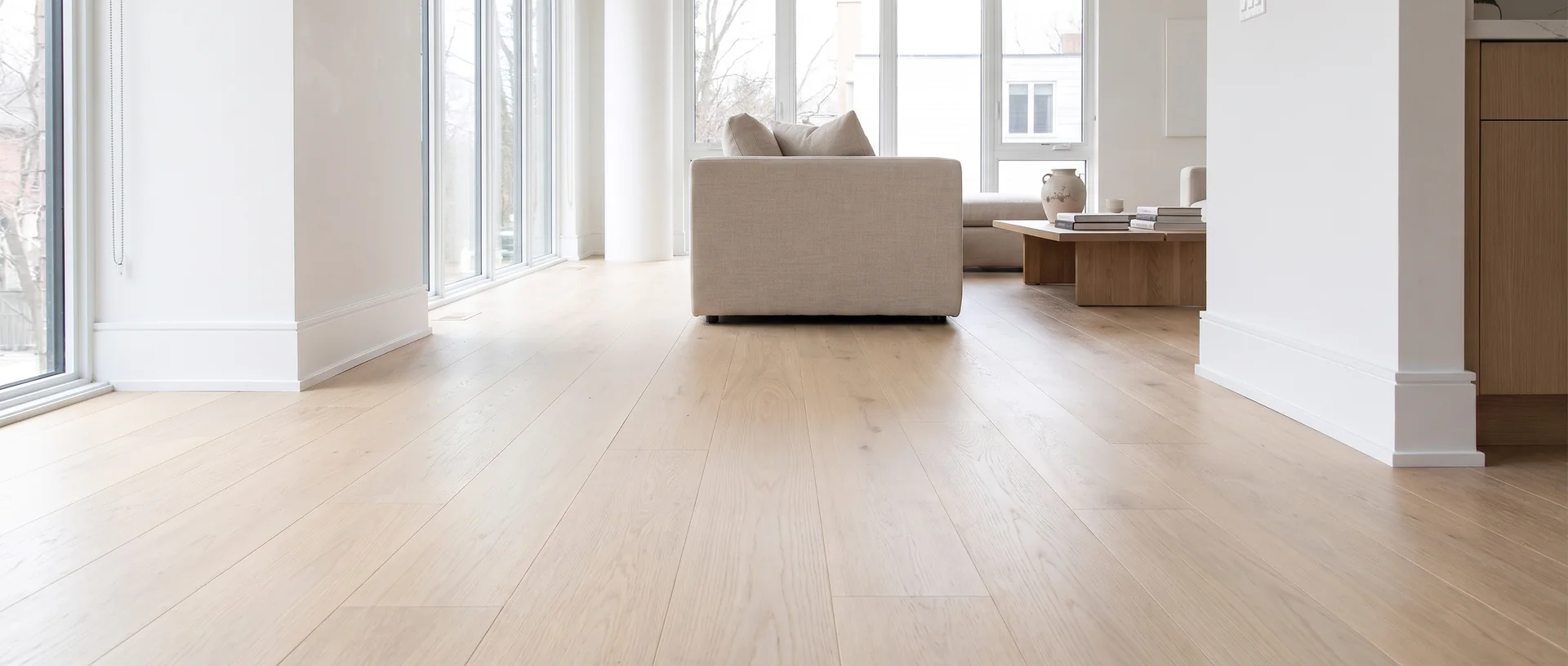
Typical of the range: Tranquil Planks Collection, Soothe Herringbone Collection and Nature Planks Collection.
Doing the stairs at the same time? See our staircase renovation in Toronto, about $7,000 a flight.
Buying Lucid flooring in Toronto
We carry Lucid in engineered hardwood and install it across Toronto and the GTA. Our installers travel as far as Wasaga Beach, Niagara Falls and Castleton. Send your square footage for a free written quote, or book the free in-home measure and we will bring samples.
Every Lucid floor we carry
All 20 Lucid floors on our site, by collection. Tap a collection to see it as a group, or a colour to open that floor.
Engineered hardwood
Frequently asked questions
Can Lucid flooring go in a basement?
Yes. Every Lucid sheet rates the floor for on, above or below grade. Below grade it is glued to the slab, so the concrete has to be dry and flat first. We test for moisture and flatness when we measure.
Can Lucid be floated or clicked together?
No. Every sheet lists Nail & Glue with a tongue-and-groove edge and no underlayment. It is nailed over a wood subfloor and glued over concrete.
What sizes does Lucid come in?
The sheets list 6½” x ¾” x RL, 7½” x ¾” x RL, 5″ x ¾” and 6″ x 3/4″, five sheets each. RL means random lengths, which scatters the end joints across the room. All of it is American Oak.
Does Lucid herringbone match the Lucid planks?
The same ten design names appear in both the Planks and the Herringbone collections, so you can pair them across rooms. Compare samples of both side by side before ordering, since pattern and board size change how a colour reads.
What warranty does Lucid carry?
The specification sheets we hold do not state a warranty or a veneer thickness. Ask for both in writing before you buy. The sheets also show no AC rating, which is normal for wood since that scale applies to laminate.
Keep reading